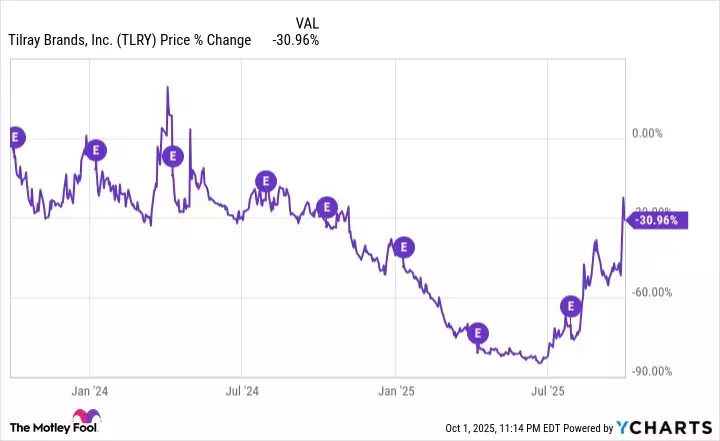

Tilray Brands' stock has recently experienced a substantial increase, reflecting investor anticipation of possible cannabis law reforms in the United States. This surge, approximately 300% since July, has ignited discussions about the company's future trajectory, especially as its next earnings report approaches on October 9. The crucial question for investors is whether this upward trend is sustainable or if the company's underlying financial challenges will lead to another downturn.
Historically, Tilray's financial health has been a concern, marked by inconsistent growth and persistent losses. Despite efforts to diversify its revenue through acquisitions in alcohol and wellness sectors, which contributed to a 4% year-over-year increase in net revenue to $821.3 million, its foundational cannabis business witnessed a 9% decrease. The company's operating loss last year was $174.7 million, an improvement from the previous year's $2.1 billion loss largely due to impairment charges, yet still indicating a struggle with profitability and organic expansion. This pattern of financial underperformance has often led to negative market reactions following earnings announcements, challenging investor confidence.
The cannabis industry in Canada, where Tilray operates, is fiercely competitive, posing significant hurdles for producers. The recurring cycle of investor enthusiasm driven by reform hopes, followed by disappointment when legislative changes don't materialize, has rendered Tilray a highly speculative investment. Given the company's ongoing financial difficulties and the uncertain landscape of cannabis reform, there's a considerable risk that the upcoming earnings report could trigger a sharp decline in its stock value, making it a precarious option for investors at present.
Investing in the dynamic and ever-evolving market requires diligence, foresight, and a comprehensive understanding of a company's fundamentals and the broader industry trends. While the allure of rapid growth in emerging sectors like cannabis can be strong, sustainable success hinges on solid financial performance, strategic innovation, and adaptability. Prudent investors often prioritize companies with proven track records of profitability and clear pathways to organic growth, balancing the excitement of potential breakthroughs with a realistic assessment of inherent risks.
