Toshiko Takaezu’s extensive body of ceramic work, spanning six decades, is a testament to her unique vision, merging natural influences with profound spiritual depth. Her pieces, showcased in the 'Worlds Within' exhibition, go beyond mere functionality, inviting viewers into a meditative space where form, texture, and light coalesce. The exhibit not only celebrates Takaezu's artistic achievements but also subtly highlights her journey as an Asian-American woman navigating a male-dominated art world. Her innovative approach, including the integration of textiles and the creation of 'closed forms' with hidden interiors, challenges conventional perceptions of ceramic art, firmly establishing her as a groundbreaking artist.
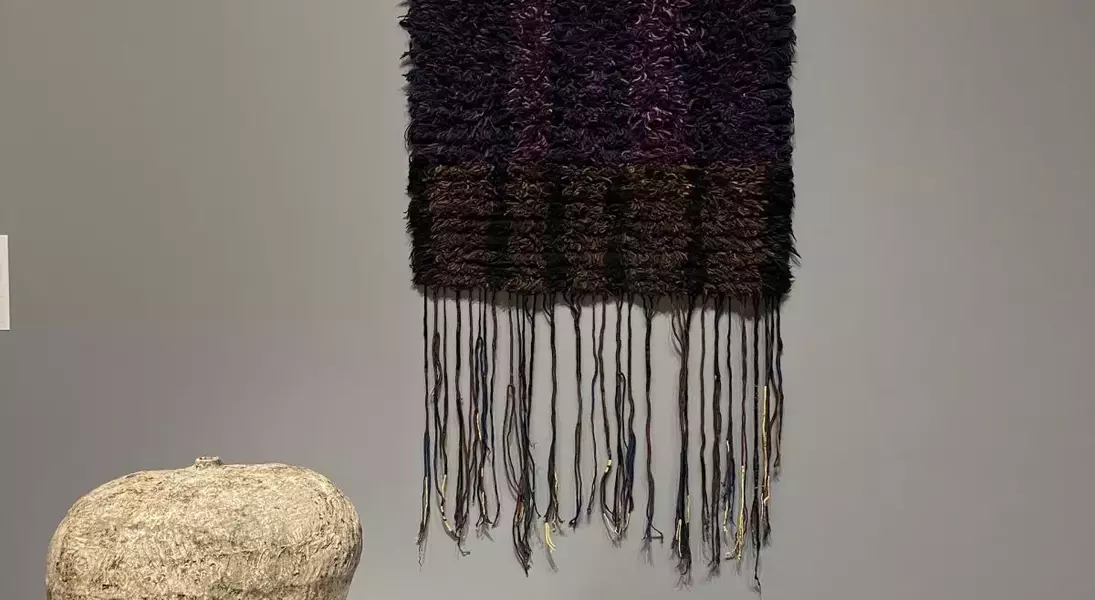
The exhibition eloquently positions Takaezu's work within a larger narrative of artistic perseverance and creative evolution. It acknowledges the historical context of her marginalization while underscoring her triumphant emergence as a leading figure in ceramic arts. The curatorial decision to recreate Takaezu's original installations, particularly the pairing of ceramics with weavings, offers a glimpse into her holistic aesthetic and her belief in the interconnectedness of different artistic disciplines. This thoughtful presentation allows for a deeper appreciation of her impact, not just on ceramics, but on the broader art historical landscape, where her contributions continue to inspire and resonate.
Exploring the Cosmic and Earthly in Takaezu's Forms
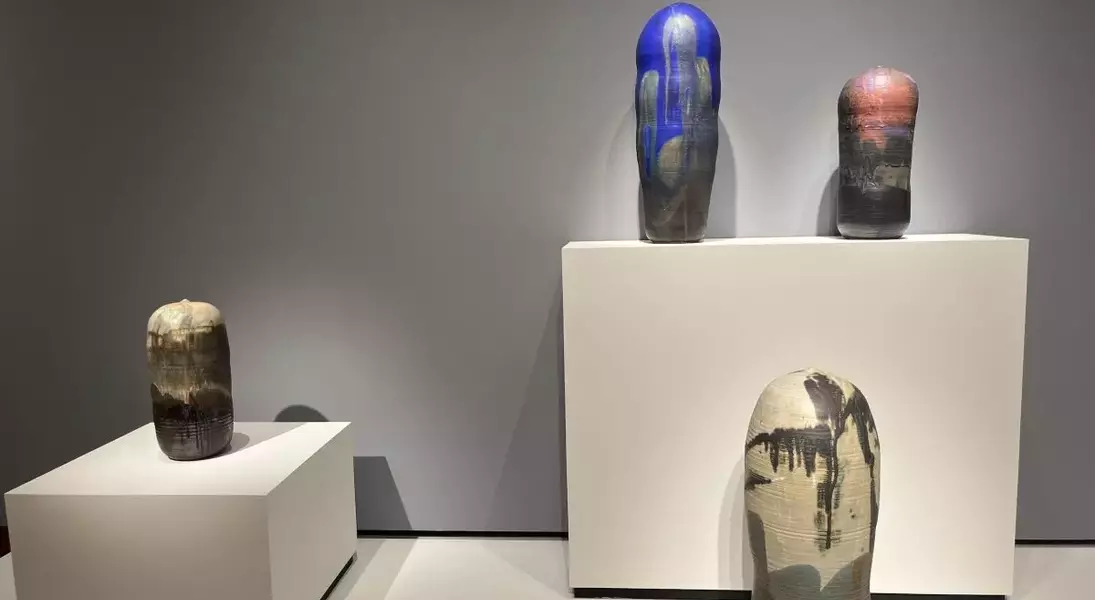
Toshiko Takaezu's 'Worlds Within' exhibition at the Chazen Museum of Art presents a captivating journey through her extensive ceramic career, showcasing pieces inspired by a myriad of global and personal influences. The artist's distinctive non-functional ceramic works, shaped by her Hawaiian upbringing, her studies at Cranbrook, an immersive eight-month exploration of Buddhist and ceramic traditions in Japan, and her life amidst the cultivated gardens of rural New Jersey, reveal a deep connection to nature and a cosmic perspective. Her unique glazing techniques, producing shimmering milky whites, vibrant turquoises, deep purples, and metallic earth tones, evoke celestial bodies and natural phenomena, making her creations appear as if glazed with ethereal light.
The current exhibition, which originated at the Noguchi Museum, marks the most significant traveling showcase of Takaezu's art in two decades. Its expansive, open layout, devoid of interior walls, transforms the gallery into a vast landscape for visitors to explore, mirroring the organic and boundless nature of her art. The collection emphasizes the artist's hands-on approach, with many vessels bearing the distinct ridges and kneaded seams from her creative process. This tactile evidence, combined with her expressive glaze applications, imbues her often dense or seemingly impenetrable forms with a sense of lightness and fluidity, reminiscent of fog, rain, and wind. Beyond the aesthetic appeal, the exhibit highlights Takaezu's persistent efforts to build a distinguished career in a field historically dominated by men, overcoming marginalization as an Asian-American woman and for choosing what were then considered 'minor disciplines' like ceramics and textiles. Her legacy is firmly cemented as a pivotal force in the history of ceramic arts, with her gentle yet powerful work standing in contrast to the more aggressive styles of her contemporaries like Peter Voulkos, focusing instead on reverence and the serene evolution of art from earthly materials and flowing surfaces.
The Interplay of Form, Spirit, and Collaboration in Takaezu's Legacy
Toshiko Takaezu's artistic practice extended beyond individual pieces, embracing a holistic aesthetic that integrated the art world, human spirituality, and the fundamental elements of nature. Her work often fused various artistic disciplines, transcending the traditional boundaries between functional and non-functional ceramics. This is vividly demonstrated by her innovative 'closed forms' from the 1960s, which redefined the vessel not as a container but as a self-contained object. The 'Tamarind' series, for instance, not only drew inspiration from natural seed pods but also subtly evoked feminine contours, adding layers of meaning to her sculptural language. A unique aspect of these closed forms was Takaezu's practice of enclosing pottery shards within them, encouraging viewers to interact by shaking the pieces to 'hear' the internal 'song,' thereby engaging with the hidden, mysterious interiors and protecting the integrity of unseen spaces.
A significant, though often underrepresented, chapter in Takaezu's life and work was her profound 50-year friendship and artistic collaboration with textile artist Lenore Tawney. Their shared living arrangements for four years, joint exhibitions, and travels to places like Guatemala to explore indigenous crafts underscore a partnership rooted in mutual artistic support and shared spiritual interests, particularly Buddhism. Both artists were trailblazers in their respective fields, challenging and pushing against the restrictive hierarchies of the art world that often relegated crafts to the periphery. Their deep connection fostered an environment of freedom, defiance, and mutual influence, serving as a powerful model of female collaboration that enriched their individual oeuvres. The exhibition culminates with the 'Star Series' (1994–2001), a collection of five human-sized totems named after celestial bodies, inviting visitors on a meditative path around these elongated forms. This final presentation subtly conveys how Takaezu's art, created through her dedicated hands, served as a conduit for universal forces, embodying a serene and profound understanding of existence that resonates deeply with audiences.