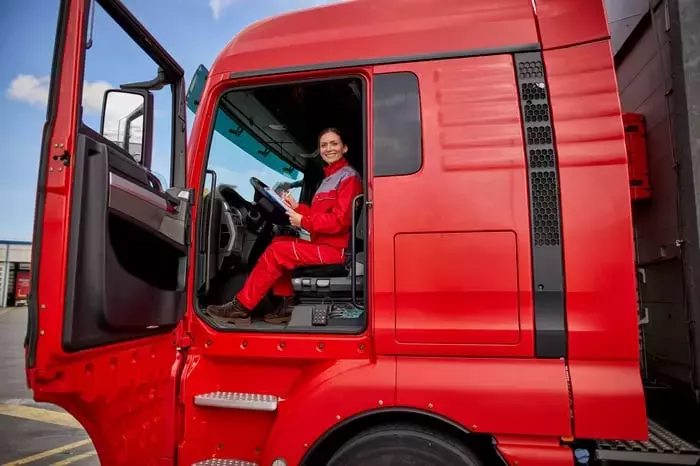
President Trump's recent declaration of a 25% tariff on heavy truck imports has stirred the investment world, causing Paccar's stock to surge by 5%. This policy, set to commence on October 1st, 2025, is framed as a measure to safeguard domestic truck manufacturers such as Peterbilt, Kenworth, Freightliner, and Mack Trucks from foreign competition.
However, the global nature of modern manufacturing complicates this protective stance. Many of the companies Trump intends to shield, including Paccar (which owns Peterbilt and Kenworth), maintain extensive international production networks. For example, Freightliner, a subsidiary of Germany's Daimler, produces trucks in both the U.S. and Mexico. Similarly, Mack Trucks, owned by Sweden's Volvo, has manufacturing facilities in the U.S. and Mexico. Even Paccar's Peterbilt and Kenworth brands have operations in Canada and Mexico, with DAF, another Paccar brand, manufacturing globally but not in the U.S. This intricate web means that tariffs designed to protect domestic industry could inadvertently impact companies that produce both locally and abroad, potentially raising costs and disrupting supply chains for the very entities they aim to support.
Despite the potential complexities introduced by these tariffs, Paccar presents an intriguing investment opportunity. With a trailing earnings multiple of 16.2x and an attractive dividend yield of 4.5%, the company appears reasonably valued. Furthermore, earnings projections indicate a near doubling over the next four years, suggesting robust growth regardless of the tariff landscape. Therefore, for investors seeking a solid industrial play, Paccar's current fundamentals suggest it may be a worthwhile addition to a portfolio.
In an increasingly interconnected global economy, protectionist policies, while well-intentioned, often encounter unforeseen challenges due to the intricate nature of modern supply chains and multinational corporations. The case of Paccar and the proposed truck tariffs highlights the delicate balance between fostering domestic industries and navigating the realities of globalized production. Successful navigation of such complexities requires foresight, adaptability, and a commitment to strategic, long-term growth, ultimately benefiting not just individual companies but the broader economic landscape.
