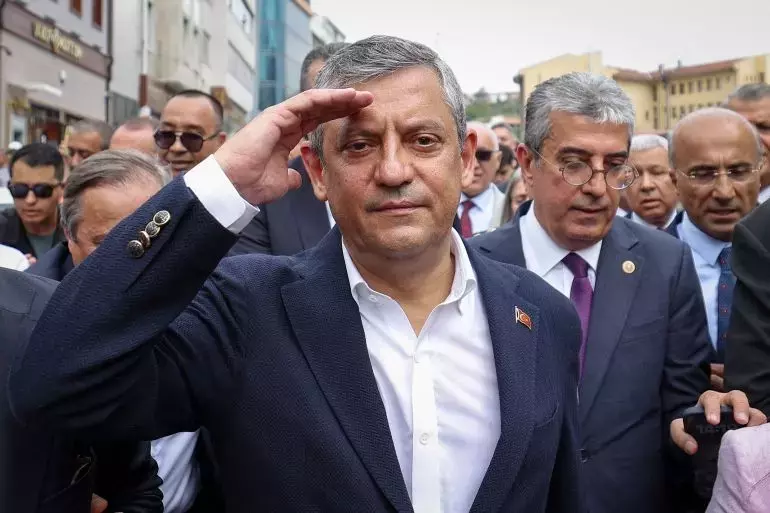
Turkiye's political arena has witnessed a notable shift with the establishment of a new political entity, signaling a potential realignment of opposition forces. Ozgur Ozel, formerly at the helm of the principal opposition Republican People's Party (CHP), recently announced the genesis of what he terms the 'New Party.' This move comes in the wake of a court-mandated dismissal from his previous leadership role within the CHP, a decision that has fueled debate and prompted a significant number of former CHP lawmakers to join Ozel in this new endeavor. The newly formed party aims to offer a fresh perspective and invigorate efforts to challenge the prolonged tenure of President Recep Tayyip Erdogan's government.
The impetus for the New Party's inception can be traced back to a May 21 court ruling that nullified the CHP congress which had originally elected Ozel as its chairman. This judicial intervention, ostensibly due to irregularities in voter processes, led to the reinstatement of Ozel's predecessor, Kemal Kilicdaroglu. However, Ozel and his allies viewed this as an undue interference in the internal democratic mechanisms of their party. The situation escalated when law enforcement agencies entered the CHP headquarters to enforce the court's decree, followed by disciplinary actions initiated by Kilicdaroglu's faction against those aligned with Ozel.
The government, for its part, has dismissed accusations of judicial meddling, characterizing the events as an internal disagreement within the CHP. They assert that the annulment serves as proof of the functional democratic and legal frameworks present in Turkiye. Critics, however, point to a pattern of legal challenges against opposition figures, including the mayor of Istanbul, Ekrem Imamoglu, who faces corruption charges—allegations he refutes. These incidents are perceived by the opposition as concerted attempts to weaken their influence, particularly following their successes in local elections where they secured major victories in key cities like Istanbul and Ankara, marking a significant setback for Erdogan's AK Party.
Looking ahead, the emergence of the New Party, despite drawing a substantial number of former CHP members, introduces an element of unpredictability into Turkiye's political future. While it presents a fresh challenge to President Erdogan, the broader fragmentation within the opposition ranks could paradoxically strengthen his position, potentially paving the way for him to extend his more than two-decade-long rule. Ozel has publicly endorsed Imamoglu as the presidential candidate for upcoming elections, emphasizing that Imamoglu's support transcends party lines, stemming from the mandate of over 15 million citizens. The trajectory of this new political force and its impact on the nation's political landscape remains a subject of intense observation.
