
The future of industries like ride-hailing is often subject to predictions, yet certainty remains elusive. While forecasting a company's exact trajectory can be challenging, examining its potential through various lenses can offer valuable insights. Uber Technologies, a leader in the ride-hailing sector, presents a compelling case for such an analysis, particularly in light of its significant market position and the evolving landscape of personal transportation.
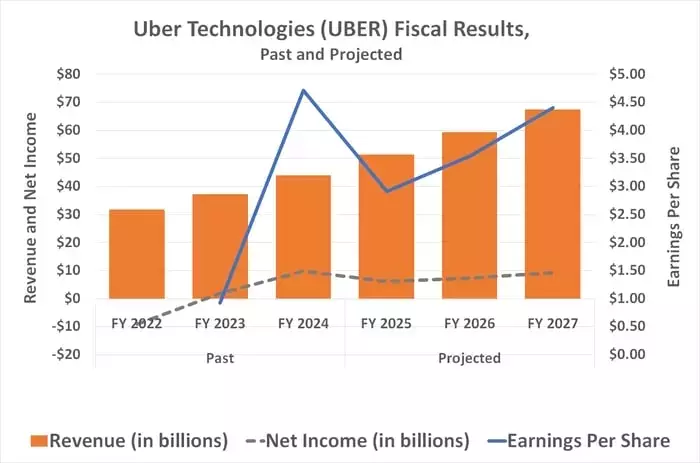
Uber's journey from a startup to a global mobility giant is marked by continuous growth and adaptation. The company, which pioneered the mainstream adoption of ride-hailing, recorded billions of trips and substantial revenue last year, demonstrating a robust operational and financial performance. Projections from analysts suggest continued strong revenue growth in the coming years. This optimistic outlook is further supported by industry research indicating a doubling of the global ride-hailing market size by 2030, alongside considerable expansion in its food and same-day delivery services. This growth is intrinsically linked to a societal shift, with a notable segment of younger consumers showing reduced interest in car ownership, favoring convenient and cost-effective alternatives like those offered by Uber.
Looking ahead, Uber's business mix is expected to evolve, with its delivery segment potentially surpassing personal mobility in terms of scale, though profitability margins in delivery currently lag. Despite this, the company is well-positioned to capitalize on the overall market expansion, potentially seeing its annual sales reach approximately $90 billion by 2030, with a corresponding increase in operating income. While the stock's precise valuation remains speculative, its forward-looking price-to-earnings ratio suggests a manageable valuation as the company grows. It's important to note that autonomous vehicles are not anticipated to be a significant factor in Uber's personal mobility services within this five-year timeframe, according to its CEO. Ultimately, while predictions carry inherent uncertainties, Uber's strong market presence and alignment with enduring societal trends make it an attractive prospect for long-term investors, a sentiment echoed by a significant majority of analysts.
In the dynamic world of business and investment, companies that not only innovate but also adapt to fundamental shifts in consumer behavior are poised for remarkable success. Uber's ability to tap into the declining desire for car ownership and provide accessible, on-demand services exemplifies this adaptability. This strategic positioning underscores the importance of foresight and resilience in achieving sustained growth and contributing positively to the evolving needs of society, making it a testament to the power of forward-thinking enterprise.
