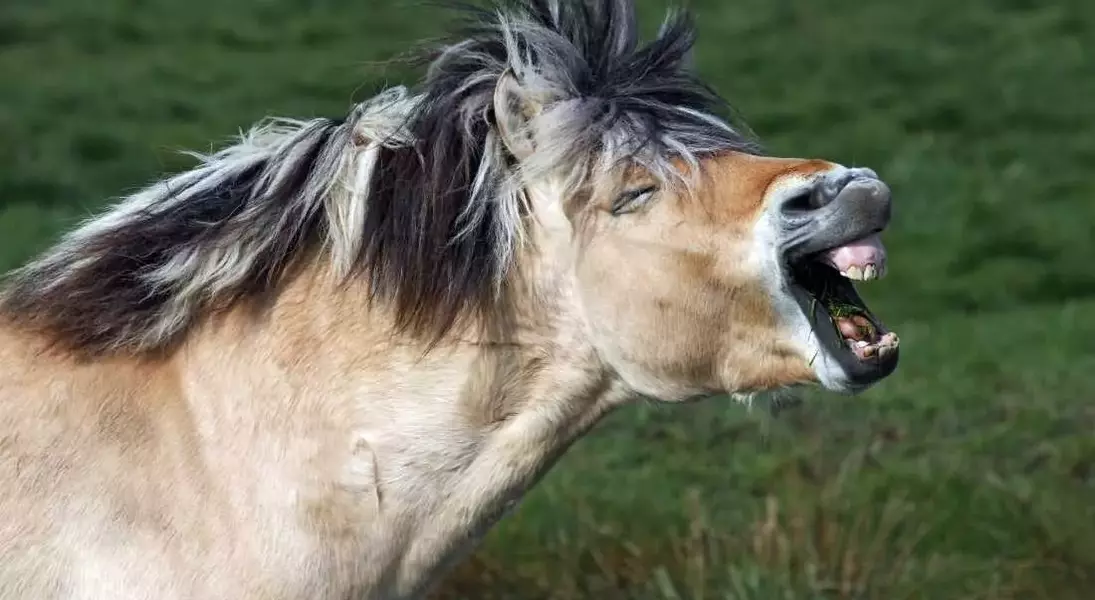
A recent investigation into horse vocalizations has revealed that the familiar whinny is far more intricate than previously thought. Animal behavioral scientist Elodie Briefer, drawing on years of personal experience with horses, noticed an unusual complexity in their calls. Her curiosity led to a scientific inquiry that ultimately demonstrated that a single whinny actually comprises two distinct frequencies occurring concurrently.
Through a series of innovative experiments, including visual analysis of sound files (spectrograms), observation of horse larynxes in action, and even studies on excised vocal tracts, Briefer and her team deciphered this complex vocal phenomenon. They found that the low-frequency component of the whinny originates from the vibration of the vocal folds, similar to human speech. Concurrently, a high-frequency whistle is produced by the constriction of strong cartilage located just above the larynx, creating a small opening that generates this second, higher tone. This dual-source mechanism explains how such a large animal can produce a high-pitched sound alongside a lower one.
This groundbreaking research, published in 'Current Biology', significantly advances our comprehension of animal communication. The discovery of these co-occurring frequencies suggests that horse whinnies are packed with nuanced emotional data, with the high-frequency indicating pleasantness or unpleasantness, and the low-frequency conveying emotional intensity. Experts in evolutionary biology and bioacoustics laud the study's comprehensive approach and its implications for understanding the intricate ways animals express themselves, ultimately benefiting animal welfare and conservation efforts by providing deeper insights into their communicative behaviors.
