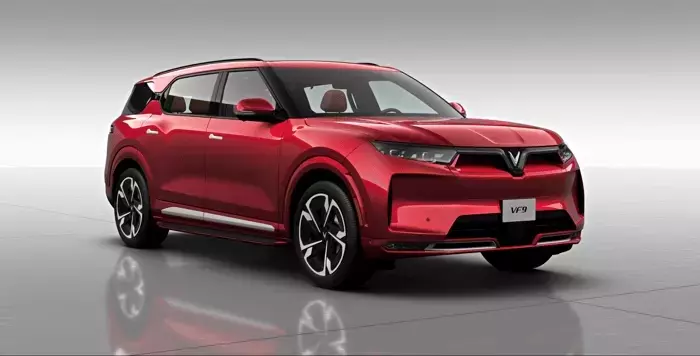
The journey for VinFast, a new entrant in the electric vehicle industry, has been fraught with difficulties as it attempts to establish a foothold in Western markets. Despite an initial surge of optimism surrounding EV manufacturers, the company has encountered substantial hurdles, including delays in launching key models, an unsuccessful direct-sales approach, and a rapidly evolving competitive landscape. These challenges have led to mounting financial losses and a strategic re-evaluation, pushing VinFast to pivot its focus back to its native Southeast Asian market, casting a shadow over its international ambitions.
The automotive industry is notoriously difficult to navigate, with a history littered with numerous manufacturers that ultimately failed to sustain operations. VinFast's experience underscores the immense complexities involved in not only producing vehicles but also in building a viable business, especially when attempting to enter unfamiliar overseas markets without an existing customer base. The company's struggles highlight the high stakes and inherent risks associated with such ventures, particularly in a segment as competitive and capital-intensive as electric vehicles.
VinFast's Ambitious Entry and Subsequent Setbacks
VinFast's foray into the U.S. and European electric vehicle markets was met with high hopes, capitalizing on a period of intense investor enthusiasm for EV companies. However, this promising beginning quickly soured due to a confluence of factors, including the introduction of new tariffs, the rise of affordable and technologically advanced Chinese EV competitors, and a slower-than-expected adoption rate of electric vehicles in key Western regions. These external pressures severely hampered VinFast's competitive edge and disrupted its initial market penetration strategies, which relied heavily on a favorable environment for new EV players. The company's plan to offer highly accessible vehicles as a gateway to the U.S. market was undermined by significant product delays, with several anticipated crossover models arriving much later than planned or still awaiting release. This inability to deliver the right products at the opportune moment prevented VinFast from establishing a much-needed market presence and capturing early adopters.
Beyond product delays, VinFast's distribution strategy also proved ineffective. The company initially adopted a direct-sales model in California, mirroring the approach of established EV players like Tesla. However, this strategy failed to yield the desired results, leading to the closure of all 15 of its direct-sales showrooms in the state and a shift towards a franchised dealership model. This strategic reversal underscores the difficulties new entrants face in replicating successful business models without adequate brand recognition, infrastructure, or a deep understanding of local market dynamics. Further complicating matters were changes in U.S. government policies, such as the termination of the $7,500 federal tax credit for EVs and the delay of its North Carolina factory launch until 2028. These setbacks forced VinFast to reassess its global expansion, ultimately redirecting its focus to the more familiar and potentially more receptive markets of Southern Asia, signaling a significant retreat from its original Western aspirations.
Financial Strain and Future Uncertainties
VinFast's aggressive expansion efforts, particularly into the challenging U.S. and European markets, have resulted in considerable financial strain, characterized by a rapid depletion of capital and widening losses. The second quarter saw a net loss of $812 million, a clear indication of the high costs associated with its unsuccessful international ventures. Despite a first-half delivery count of 72,167 vehicles, the company faces an uphill battle to meet its ambitious annual sales target of 200,000 units, suggesting that operational inefficiencies and market resistance are severely impacting its bottom line. The substantial financial backing from its co-founder, Pham Nhat Vuong, through his conglomerate Vingroup, has been a critical lifeline, with an injection of approximately $1.5 billion in exchange for specific research and development assets. This financial support, while crucial for immediate stability, highlights the ongoing need for external capital to sustain the company's operations and mitigate its cash burn.
The continued financial challenges, coupled with its failed attempts to gain traction in Western markets, paint a concerning picture for VinFast's future. The company now faces intensified competition from an array of affordable and technologically advanced Chinese EV manufacturers within Asian markets, further complicating its path to profitability. Without a clear and effective strategy to significantly scale its operations and establish a robust market presence outside of Vietnam, the long-term viability of VinFast as an independent, growing entity appears increasingly doubtful. The possibility of Vingroup eventually integrating VinFast more fully into its broader conglomerate structure, potentially leading to its diminished public profile, is a scenario that investors are advised to consider. The company's journey thus far suggests that the initial global aspirations might be curtailed, transforming it from a potential international disruptor into a more regionally focused enterprise, or even a subsidiary, should it fail to achieve independent market success.
