
This analysis delves into the investment merits of two prominent restaurant chains, Wingstop and Domino's Pizza, with a particular focus on their future growth trajectories and shareholder returns. While Domino's has established itself as a global leader with a resilient business structure, Wingstop presents a compelling case for outperformance in the coming years due to its aggressive expansion and unique operational advantages. The insights provided aim to shed light on why Wingstop might currently offer a more attractive investment proposition despite the established success of its pizza counterpart.
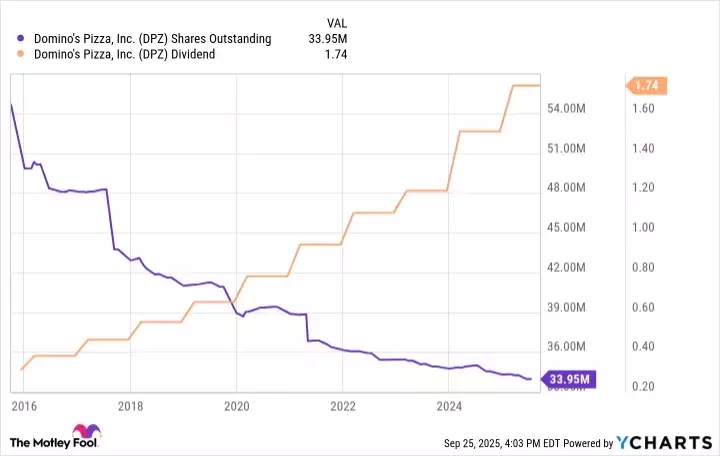
Domino's Pizza, a behemoth in the fast-food industry, showcases a highly effective business model. By Q2 2025, it had expanded to over 21,000 outlets worldwide, with an impressive 99% operating under a franchise system. This structure allows the parent company to primarily generate income through royalties and franchise fees, fostering a high-margin operational framework. An interesting aspect of Domino's revenue stream is that 60% originates from its supply chain operations, providing equipment and food to its franchisees. This integrated approach not only ensures consistency across its vast network but also aligns the interests of the parent company with its independent operators by sharing a portion of the supply chain profits. This asset-light and consistent revenue generation model has historically enabled Domino's to reward its investors through consistent dividends and share repurchase programs, making it a reliable choice for many.
In contrast, Wingstop, though smaller in scale, mirrors many of Domino's strategic advantages. As of Q2 2025, Wingstop managed over 2,800 locations globally, with approximately 98% being franchisee-operated. This similar high-margin, asset-light model is a cornerstone of its appeal. A key differentiator for Wingstop is its strong unit economics, which fuels a high demand among potential franchisees. The average U.S. Wingstop location generates an impressive $2.1 million in annual revenue. A significant portion of these sales, nearly three-quarters, are digital orders, predominantly for delivery or takeout. This high volume of digital transactions and reduced in-store dining means Wingstop locations can operate efficiently with fewer staff, leading to enhanced profitability for franchisees. This profitability, in turn, motivates rapid expansion, with the company projected to open more than 400 new locations in the current year, supported by a record-high pipeline of future developments.
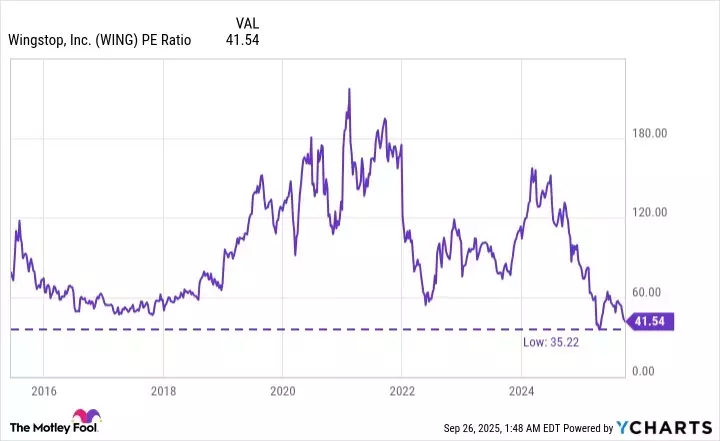
The growth prospects for Wingstop appear particularly robust. Management projects an ambitious expansion to 6,000 U.S. locations from its current 2,400, alongside an increase in average annual sales per location to $3 million. Given its track record of 21 consecutive years of same-store sales growth, these targets seem achievable. Furthermore, this projection excludes the substantial international growth opportunities, where Wingstop currently has a mere 400 locations. While Domino's experiences single-digit revenue growth, Wingstop is consistently achieving double-digit growth, a trend it is well-positioned to maintain for an extended period. The broader market downturn in restaurant stocks during 2025 has created a timely entry point for investors, with Wingstop's stock falling over 40% from its peak and trading near its lowest price-to-earnings valuation in history. This presents a unique chance to invest in a company with significant long-term upside.
The current market conditions, characterized by a general decline in restaurant sector valuations, have opened up a strategic window for investing in high-quality companies that may be undervalued. Wingstop, with its impressive unit economics, substantial growth runway, and a valuation near historical lows, stands out as a prime candidate. The author's long-term patience and strategic approach of dollar-cost averaging into the stock underscore a belief in its potential to deliver superior returns compared to other market options.
