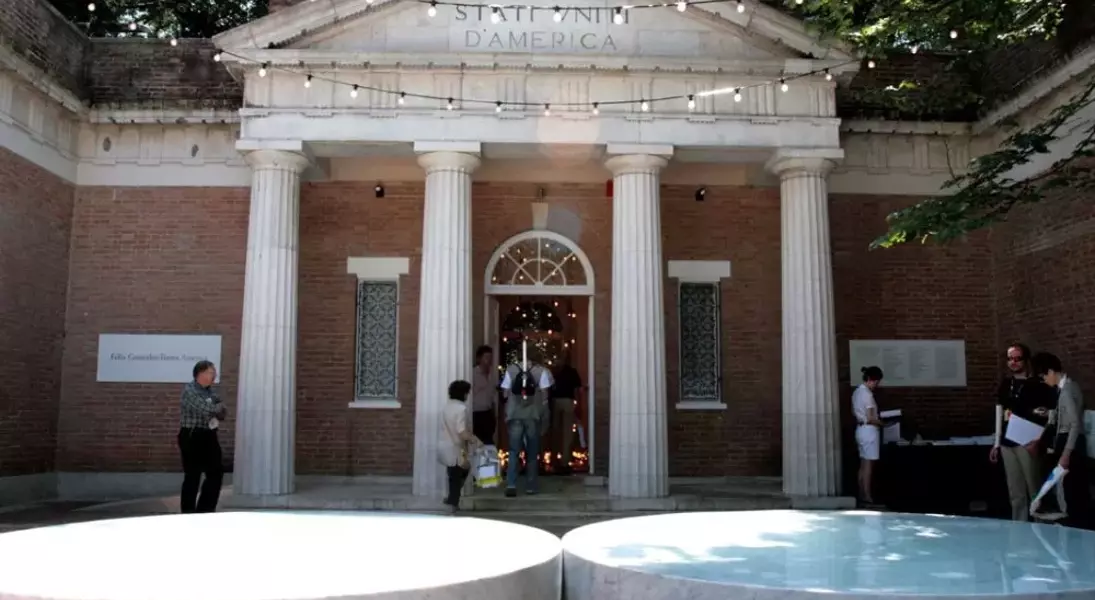
The United States State Department has officially announced Alma Allen, an artist based in Mexico, as the chosen representative for the American Pavilion at the upcoming 2026 Venice Biennale, set to open next May.
This selection signals a shift in the traditional approach for the US Pavilion. Historically, the honor was typically bestowed upon an artist and curator collaborating with an established museum. However, this year, the American Arts Conservancy (AAC), a newly formed nonprofit, has been named the commissioning institution. Jeffrey Uslip, a member of the AAC's advisory council, will serve as the curator, with Jenni Parido, the AAC's executive director and founder, acting as the pavilion's official commissioner. Allen himself is an unconventional choice, given that artists with more extensive résumés and robust institutional backing usually fill this role. He has, to date, presented only two solo museum exhibitions over his three-decade career.
Allen's exhibition, christened "Call Me the Breeze," will showcase around 30 pieces, including several site-specific installations designed for the Pavilion's exterior. The artist revealed in a recent interview that he did not actively seek the commission; rather, Uslip approached him in October, after the State Department had already given its approval. The State Department's communication indicates that the exhibition will highlight Allen's ability to transform materials and explore the idea of 'elevation' both in its physical form and as a symbol of shared hope and personal achievement, echoing the Trump Administration's focus on showcasing American exceptionalism.
This announcement underscores a dynamic evolution in the landscape of international art representation. The decision to select Alma Allen and to involve the American Arts Conservancy demonstrates a willingness to embrace new perspectives and methodologies in presenting American artistic talent on a global stage. This forward-thinking approach fosters creativity and broadens the dialogue surrounding contemporary art, encouraging a more inclusive and diverse representation of national culture.