
Target, a well-known retail giant, has been navigating a challenging period, with its stock performance lagging behind the broader market's significant gains. However, its impressive 5.1% dividend yield, combined with a history of 54 years of consistent dividend increases, makes it an attractive prospect for income-focused investors. The company is currently engaged in a comprehensive turnaround effort, aiming to revitalize its operations and restore investor confidence. This initiative focuses on leveraging its unique strengths, such as exclusive partnerships, and optimizing its supply chain and digital presence to drive future growth. Despite the skepticism from some investors, Target's robust cash flow generation positions it to sustain and potentially increase its dividend payouts, offering a steady return for those willing to invest for the long term.
The current market landscape, characterized by soaring valuations in tech and AI sectors, often overshadows companies like Target that are in a rebuilding phase. Yet, for discerning investors seeking value, Target presents a distinct opportunity. Its strategic plan to achieve significant sales growth by 2030, through improved operational efficiency and enhanced customer engagement, signals a clear path forward. The success of this turnaround hinges on demonstrating tangible improvements, particularly in same-store sales growth, which will indicate a resurgence in customer traffic and spending. While the journey may demand patience, Target's deep value proposition and reliable dividend stream make it a noteworthy consideration in a market increasingly dominated by high-growth narratives.
Target's Strategic Pivot and Market Challenges
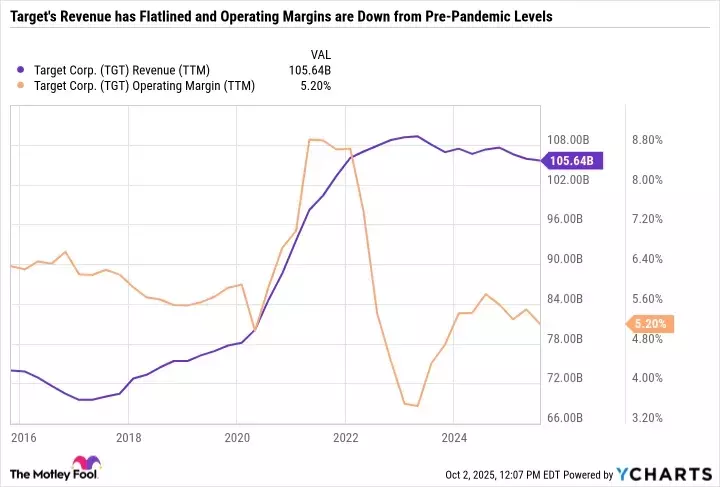
Target has encountered considerable difficulties in recent years, largely stemming from an overestimation of consumer demand for discretionary items following the initial phases of the COVID-19 pandemic. This misjudgment led to an excessive inventory, necessitating significant price reductions that subsequently eroded operating margins. The company's sales growth has stagnated, and its profitability has yet to fully rebound to pre-pandemic levels, a situation further exacerbated by a shift in consumer behavior towards value-oriented retailers like Walmart and Costco. These rivals have successfully captured a larger share of the market as shoppers prioritize affordability over experiential retail. Consequently, Target has been compelled to re-evaluate its business model and implement strategic adjustments to remain competitive and appeal to its customer base.
In response to these market dynamics, Target is strategically emphasizing its core strengths, particularly by enhancing the in-store experience and curating an engaging product assortment. A key element of this revised strategy involves forging exclusive partnerships, which have historically proven effective in stimulating sales, as evidenced by successful collaborations such as its Taylor Swift exclusives. These unique offerings aim to differentiate Target from competitors and draw customers back into its physical stores. Furthermore, the company has unveiled an ambitious plan to generate an additional $15 billion in sales growth by 2030. This multifaceted initiative includes optimizing its supply chain, expanding its rewards program, and seamlessly integrating its online and in-store shopping experiences. However, despite these proactive measures, investor sentiment remains cautious, with the stock currently trading near six-year lows, even as the broader S&P 500 reaches new highs, indicating a need for more compelling evidence of a successful turnaround.
Dividend Reliability and Long-Term Investor Outlook
In a financial climate where many growth stocks command high valuations, Target offers a contrasting investment profile: a deeply undervalued asset with a high dividend yield, supported by robust free cash flow. For investors prioritizing passive income, Target's consistent dividend, which has increased for over five decades, presents a significant appeal. Projecting a modest 2% annual increase in dividend payouts, shareholders could anticipate a substantial return of approximately 26.5% from dividends alone over the next five years, based on the current stock price. This steady income stream provides a buffer against market volatility and offers a tangible return even if the stock price remains stagnant during the turnaround period. Such a predictable payout can be particularly attractive to those seeking stability and regular income in their investment portfolios, distinguishing Target from more speculative growth opportunities.
However, investing in Target at this juncture demands a considerable degree of patience and a long-term perspective. While the dividend provides a compelling reason to hold, the ultimate success of the investment hinges on the company's ability to execute its turnaround strategy effectively and demonstrate a return to sustainable growth. The most critical metric for assessing the progress of this transformation will be same-store sales growth. An upward trend in this indicator would signal that Target is successfully attracting customers and encouraging increased spending, thereby validating its strategic initiatives. Conversely, a continued decline or stagnation in same-store sales would suggest ongoing challenges and potentially prolong the period of investor uncertainty. Therefore, prospective investors should meticulously monitor Target's upcoming earnings reports, paying close attention to this key metric to gauge the efficacy of its strategic pivot and its potential for long-term capital appreciation beyond its attractive dividend yield.
