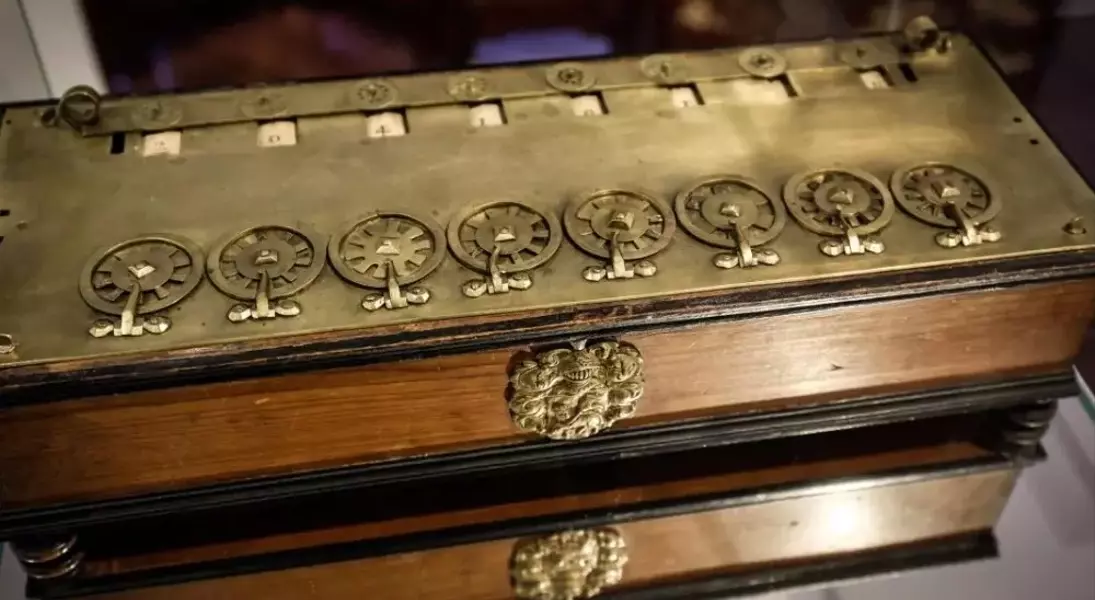
Christie's Paris has abruptly halted the auction of a groundbreaking 17th-century calculating machine, known as a 'Pascaline,' following a contentious export ban issued by French authorities. This unique device, a testament to the genius of mathematician Blaise Pascal, was poised to be a star lot, but its sale has been paused amidst a dispute over its cultural significance and national heritage status. The decision highlights the ongoing tension between the private art market and national efforts to preserve historical artifacts.
Christie's Paris Auction of Pascaline Calculator Suspended Amidst French Export Ban
In a dramatic turn of events on November 19, 2025, Christie's Paris announced the suspension of the much-anticipated sale of a rare 17th-century calculating machine. This extraordinary artifact, one of only nine surviving 'Pascalines' crafted by the visionary French mathematician Blaise Pascal, was slated for auction as part of the esteemed collection of the late book and manuscript collector Léon Parcé (1894–1979). The instrument, a marvel of early engineering and a precursor to modern computers, was estimated to command a price between $2.3 million and $3.5 million.
The suspension was triggered by an export ban imposed by French authorities. This decision followed impassioned appeals from French scientists and researchers, who collectively argued that the Pascaline transcended its monetary value and represented an invaluable piece of national heritage. They contended that the machine, a cornerstone of scientific and technological history, should unequivocally remain within French borders. While an export certificate had initially been granted in May, the new ban effectively prevented any potential international buyer from removing the historical calculator from France.
Crafted from brass and wood, adorned with elegant ebony embellishments, this particular Pascaline is believed to be the sole example of Pascal's invention still held in private ownership. The majority of the other existing Pascalines are safeguarded in prominent museum collections, with one notable exception held by IBM. Pascal, a brilliant mind, conceived and constructed this device in 1642 at the tender age of 19. His motivation stemmed from a desire to assist his father, who, as the chief of Normandy’s Board of Excise, faced the daunting task of reorganizing the province’s complex tax revenues. Over time, Pascal meticulously produced approximately 20 such finished calculators before dedicating his formidable intellect to other scientific pursuits.
Pascal's inventive spirit led him to design three distinct versions of his calculating machines: one capable of performing addition, subtraction, multiplication, and division; another tailored for intricate accounting tasks; and a third specifically engineered for calculating distances. The instrument at the heart of this dispute is particularly significant as it represents the only extant example of this final, distance-calculating model. Christie's, in its initial description of the lot, eloquently underscored the machine's profound impact, stating, "The Pascaline is much more than a simple mechanical object: it is the first attempt in history to substitute the human mind with a machine."
The fate of this remarkable historical artifact now hangs in the balance, with a definitive decision regarding its classification as a national treasure anticipated to take several months. This ongoing saga at Christie's Paris vividly illustrates the intricate legal and ethical considerations surrounding the sale and preservation of culturally significant items, particularly when national identity and scientific legacy are at stake.
This incident serves as a poignant reminder of the profound value societies place on their historical and scientific legacies. It prompts reflection on the delicate balance between private ownership and public access to artifacts that represent pivotal moments in human ingenuity. The Pascaline, a tangible link to the dawn of mechanical computation, embodies an era of profound intellectual discovery. Its contested sale underscores the importance of national heritage preservation and the continuous dialogue needed to ensure that such treasures remain accessible for study, appreciation, and inspiration for generations to come. Perhaps this pause in the auction will pave the way for a more thoughtful and broadly beneficial outcome, ensuring the Pascaline's place in history is not merely as a high-value commodity, but as a cherished symbol of human innovatio