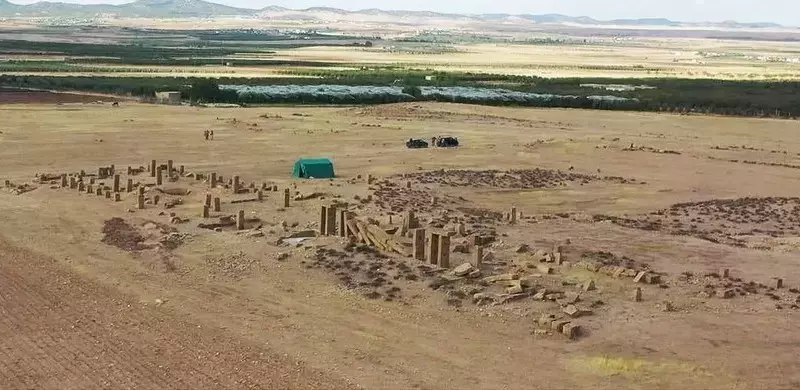
An international research team has made a remarkable archaeological discovery in Tunisia: a massive ancient Roman facility dedicated to olive oil production. This find offers invaluable insights into the agricultural prowess and socioeconomic structures of Roman Africa, highlighting its pivotal role in supplying olive oil to the heart of the Roman Empire. The site, active between the 3rd and 6th centuries, showcases an industrial-scale operation with numerous presses, underscoring the region's significant contribution to ancient commerce.
The collaborative effort, involving experts from Spain, Tunisia, and Italy, pinpointed the site at Henchir el Begar, situated near Tunisia's western border with Algeria. This area, historically known as Cillium under Roman rule and located within the Kasserine region, was strategically important. Its unique climate, characterized by temperature fluctuations and limited rainfall, proved ideal for cultivating olives, making it a prime location for such a large-scale enterprise.
Professor Luigi Sperti, an archaeology expert from Ca’ Foscari University in Venice and a lead researcher on the project, emphasized the profound implications of this discovery. He stated that the mission provides an unparalleled understanding of the agricultural and socio-economic framework of the Roman African frontier regions. This suggests that the area was not merely a provincial outpost but a vital hub of production within the vast Roman network.
The excavation at Henchir el Begar revealed two distinct olive oil facilities. One of these, identified as Site 1, boasts the largest mill found in Tunisia and ranks as the second-largest within the entire Roman Empire, featuring an impressive 12 beam presses, known as torculariums. Site 2, though slightly smaller, also housed a substantial operation with the remnants of eight presses. The sheer scale of these facilities underscores the sophisticated industrial capabilities of the Romans in this period.
Olive oil held immense importance in the daily lives of ancient Romans, as Professor Sperti further elaborated. Beyond its culinary use as a condiment, it was integral to personal hygiene, athletic practices, and even medicine. Lower-grade olive oil also served as a common fuel source for lighting, demonstrating its versatile and indispensable nature across various aspects of Roman society.
This significant archaeological find not only deepens our understanding of ancient Roman agricultural practices and economic networks but also highlights the critical role North Africa played in the empire's sustenance and trade. The industrial scale of olive oil production at Henchir el Begar underscores the region's prosperity and its advanced capabilities in ancient manufacturing, cementing its legacy as a vital supplier to Rome.