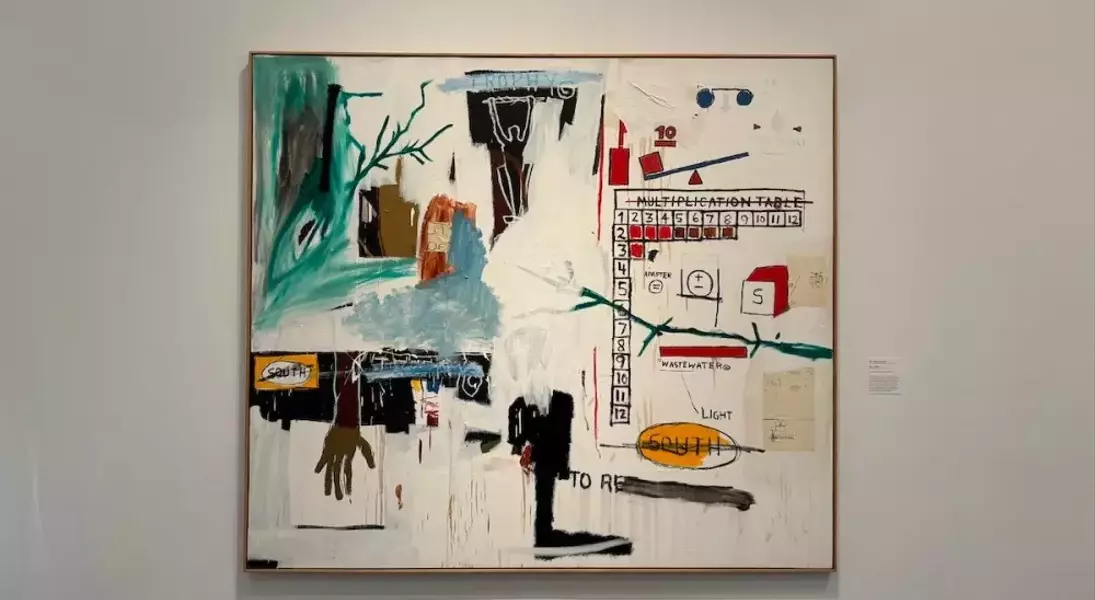
The Studio Museum in Harlem is preparing for its highly anticipated public reopening on November 15th, and among the new treasures it will unveil is a groundbreaking addition to its permanent collection. The museum recently showcased its latest acquisitions to the press, including a significant work by Jean-Michel Basquiat, marking the first time a painting by the iconic artist has entered its esteemed holdings.
This pivotal acquisition, Basquiat's 1984 piece titled 'Bayou,' was generously donated in 2023 by financier Joseph Perella and his wife, Amy. This gift carries additional significance due to Joseph Perella's mentorship of Raymond J. McGuire, a prominent investment banking executive, an ARTnews Top 200 Collector, and the current board chair for the Studio Museum. The inclusion of 'Bayou' distinguishes the Studio Museum among a select few U.S. institutions that possess original paintings by Basquiat, a notable fact given the artist's immense influence and market demand. For instance, while the Museum of Modern Art has exhibited Basquiat's 'Glenn' (1985), it was always on loan, indicating a gap in their own collection that the Studio Museum has now filled. Other major institutions, like the Whitney Museum, which acquired 'Hollywood Africans' in the 1980s, and the Metropolitan Museum of Art, which only obtained its first Basquiat paintings in 2021, underscore the rarity and importance of such an acquisition.
The painting 'Bayou' itself offers rich thematic depth, featuring a partially depicted multiplication table, and fragmented words such as 'WASTEWATER' and 'SOUTH,' alongside a delicate hand. These elements subtly allude to Basquiat's experiences in New Orleans and along the Mississippi River. Historically, 'Bayou' is believed to have been part of an exhibition in 1985 at Galerie Bruno Bischofberger in Zurich, a gallery instrumental in elevating Basquiat's international profile. Now, this powerful work has found a lasting home in Basquiat's native city, allowing it to connect with a broader audience and enrich the cultural landscape.
The integration of such a monumental work into the Studio Museum's collection not only elevates its stature but also provides a profound opportunity for reflection on the artist's legacy and impact. This acquisition serves as a testament to the ongoing efforts to ensure that institutions reflect a diverse range of artistic voices and histories. It champions the idea that art should be accessible and that cultural institutions play a vital role in preserving and presenting narratives that resonate deeply with communities, fostering a more inclusive and vibrant artistic discourse for future generations.
