Heidi Lau, a ceramic artist, creates profound sculptures that explore the intricate relationship between chaos and order, drawing inspiration from ancient Chinese myths and personal narratives. Her work challenges conventional views on art and disability, using ceramics as a medium for both personal expression and cultural commentary.
Unearthing the Primal: Heidi Lau's Visionary Ceramics
The Genesis of Form: Chaos and Order in Clay
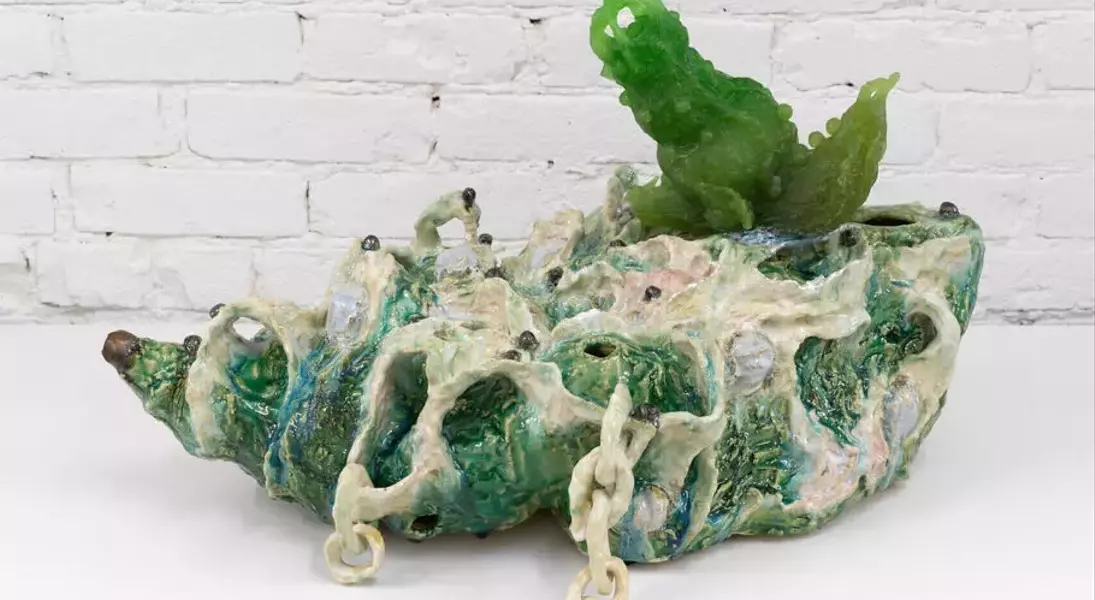
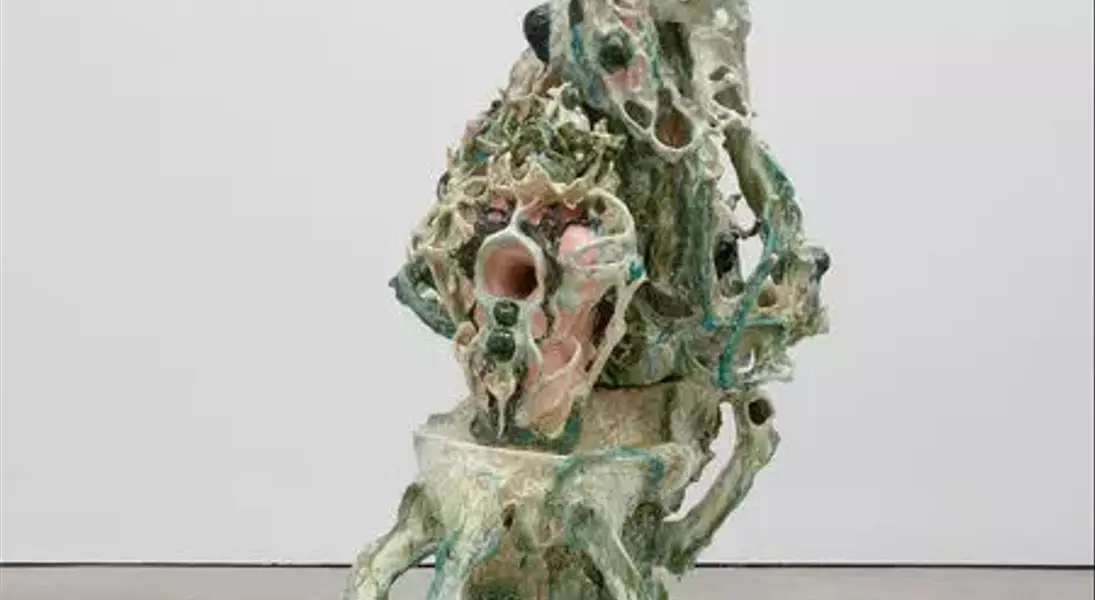
Daoist and Confucian traditions often describe a primordial state of 'hundun,' representing the chaotic void before creation. This concept of primordial disorder deeply influences Heidi Lau's ceramic art. Her sculptures, characterized by their fluid and unconstrained shapes, capture the dynamic interplay between raw, unrefined matter and meticulously crafted form. This aesthetic is vividly brought to life in her recent exhibition, 'Pavilion Procession' (2025), displayed at Hong Kong's M+ museum as part of the prestigious Sigg Prize.
A Rising Star: Lau's Expanding Influence in the Art World
Heidi Lau's artistic trajectory continues to ascend, marked by significant exhibitions and critical acclaim. Her distinctive blend of ancient Chinese mythologies and a raw, evocative artistic style sets her apart in the contemporary art landscape. Following her recent display at The Met, she is slated for a prominent two-artist presentation at the Institute of Contemporary Art San Francisco next year. Lau's ability to imbue traditional mediums with fresh perspectives, rooted in mythical narratives, is a hallmark of her captivating practice.
The Grotesque and the Beautiful: An Artist's Philosophical Approach
In a reflective moment at the M+ museum cafe, with a glimpse of her installation suggesting a celestial bridge, Lau articulated her artistic philosophy: to craft objects that are simultaneously beautiful and grotesque. This duality is central to her work, inviting viewers to ponder the complexities of existence and form.
Installation as Narrative: Exploring the Cosmic and the Earthly
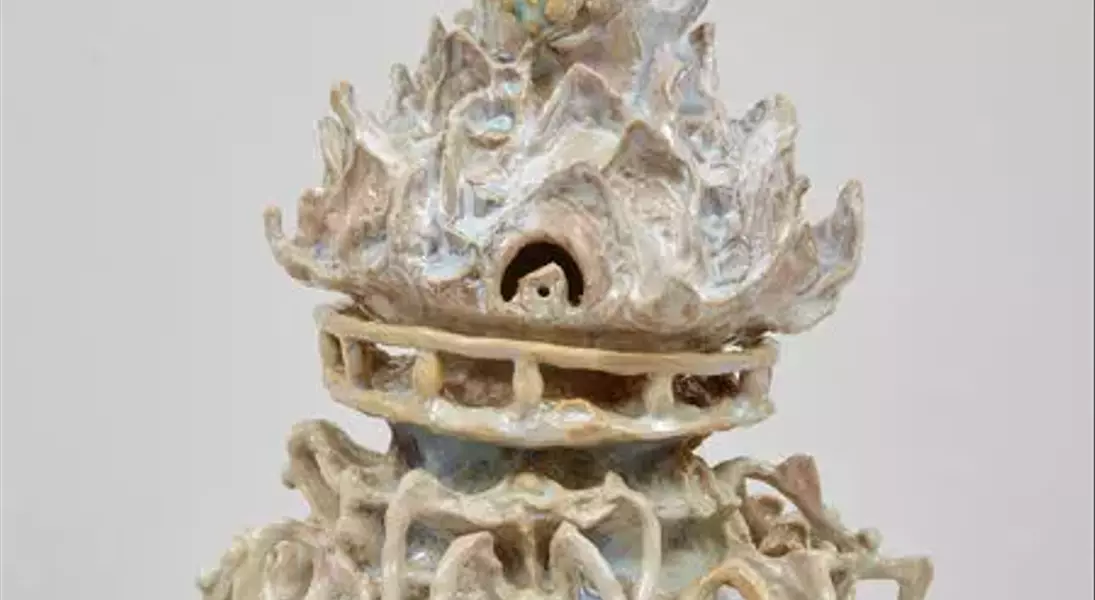
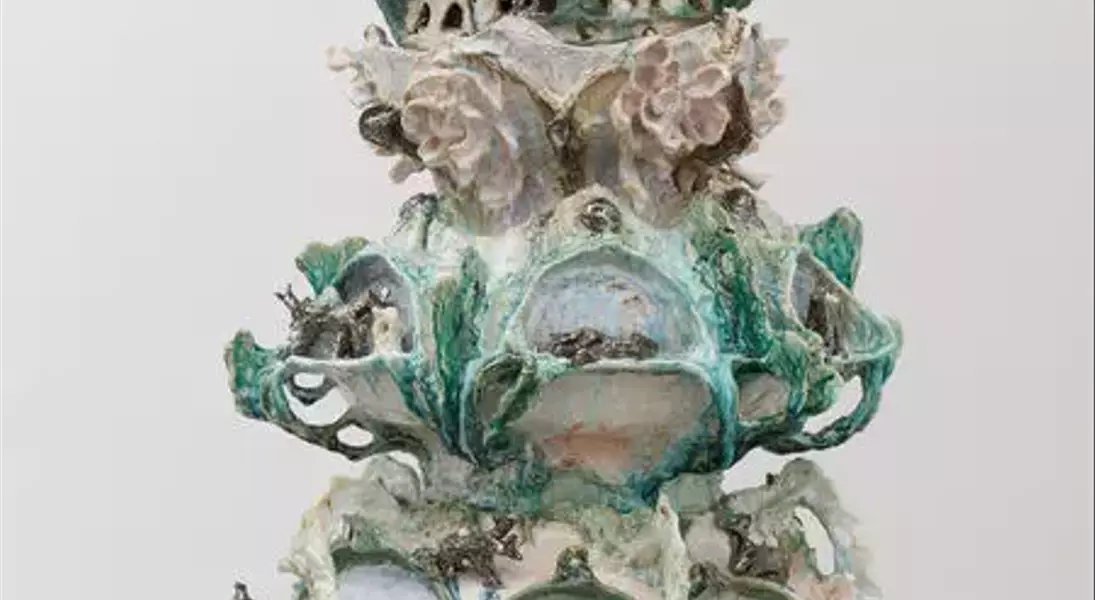
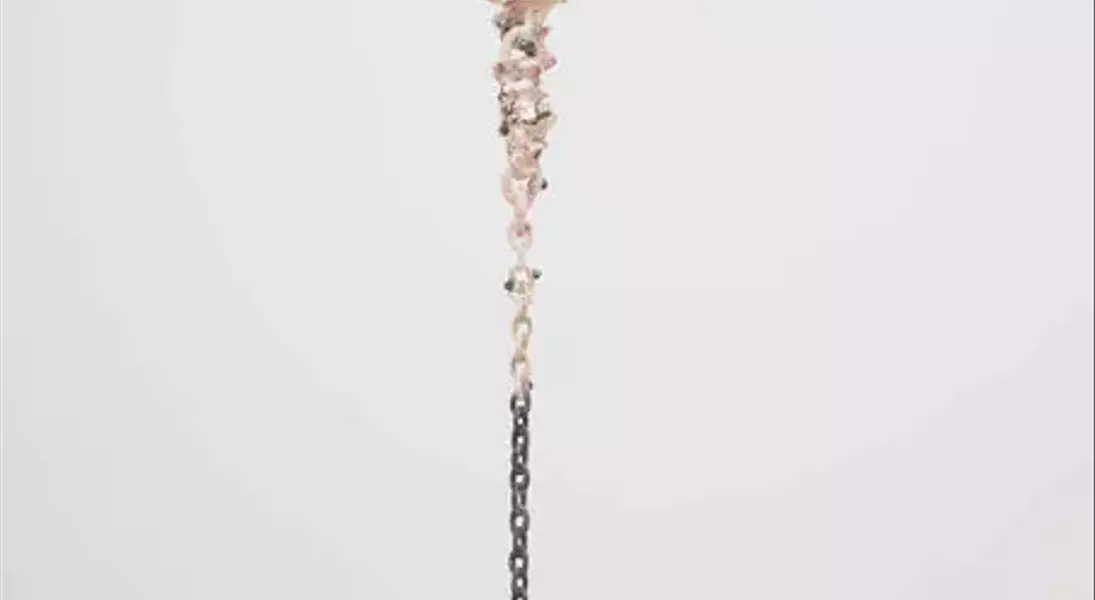
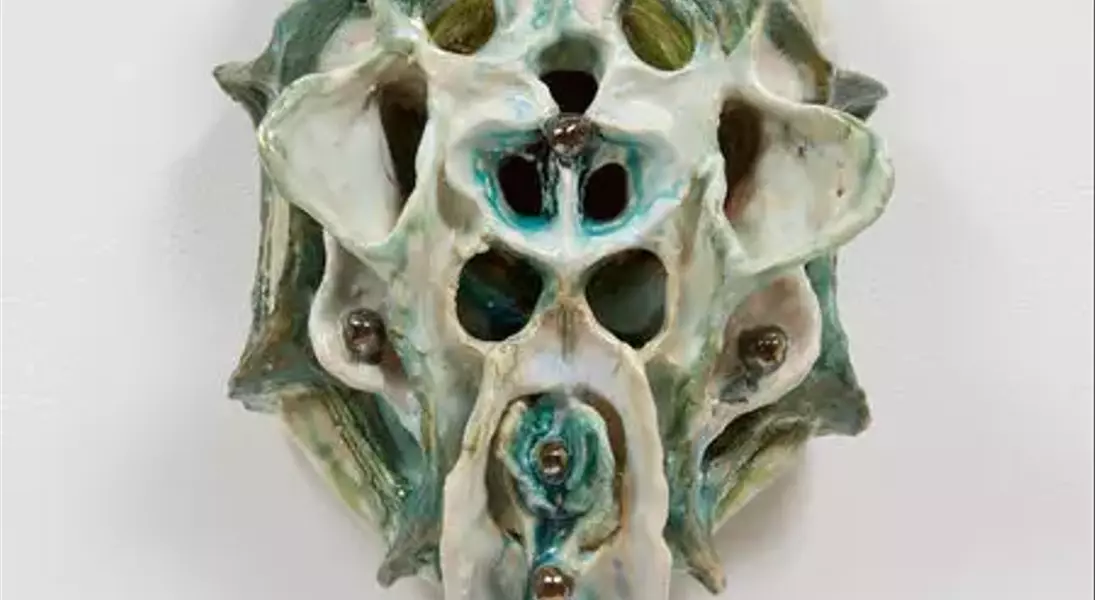
'Pavilion Procession' is a multi-layered installation featuring ceramic chains adorned with unique, enigmatic objects—some resembling pagoda-like vessels, others appearing as otherworldly, UFO-esque forms—descending from the ceiling. Beneath them, twisted vessels are arranged on elevated platforms, evoking the reverence of an altar. The pieces, rendered in hues of sage green, dusty pink, muted lilac, and vibrant blue, convey a sense of fluidity, as if caught between states of emergence and decay. A notable element is a large blue structure, an interpretation of an 'anagama' kiln, an ancient Japanese furnace, adorned with tiny hands, masked visages, and a small flame, subtly referencing the ceramic firing process. Another dragon-like form in the installation pays homage to the Zhulong, a human-faced dragon from the ancient Chinese text, 'Shanhaijing,' a source of endless fascination for Lau due to its array of fantastical, hybrid beings.
Mythological Beings as Metaphors for Human Experience
Lau's artistic lexicon frequently incorporates various mythical creatures, from human-faced dragons and snake goddesses to faceless pigs and nine-tailed frogs. These beings, often depicted with physical peculiarities or unique life purposes, resonate deeply with the artist. She perceives their 'otherness' as a poignant metaphor for real-world mental illnesses and disabilities, conditions that have personally touched her family. Through her art, Lau seeks to reframe the societal perception of these differences, advocating for a view that celebrates individuality and rejects the notion that human value is tied to productivity.
Technology and Art: The Poetic, Useless, and Witchy
In an innovative departure, Lau integrated technology into 'Pavilion Procession,' exemplified by a ceramic spider that moves with a deliberate, limping gait. This robotic element, programmed to mimic the walk of her brother and father through video analysis, intentionally embodies a 'glitchy' quality. Lau designed it to be 'anti-productive,' scheduled for multiple naps daily, symbolizing a rejection of relentless efficiency and a celebration of deliberate slowness. This intentional programming reflects her desire to make technology 'poetic, useless, or even witchy,' aligning with her broader artistic vision.
An Unconventional Path: From Printmaking to Ceramics
Lau's mastery of ceramics is remarkable given her lack of formal training in the medium. Her academic background is in printmaking from New York University. A residency in Ireland in 2012 sparked her passion for pottery, leading her to eventually establish her own studio and acquire a kiln with the support of the Joan Mitchell Foundation's Painters & Sculptors Grant in 2016. Her unorthodox journey has arguably contributed to her fresh and innovative approach to the traditional craft.
The Haptic Process: A Dialogue Between Artist and Clay
Lau's creative process is profoundly haptic, involving the meticulous hand-engraving of motifs and textures into clay with a needle tool. She describes this physical engagement as empowering, a conduit for imbuing inanimate objects with energy and presence. Rejecting a hierarchical relationship between artist and material, Lau views her work as a collaborative endeavor, where she and the clay labor together, fostering a non-dominant exchange. This philosophy extends to her aesthetic, which often showcases sculptures that appear to writhe and contort, reflecting the ongoing internal tension between artistic control and material surrender.
Family, Grief, and Cultural Identity: A Personal Artistic Journey
Lau's art is deeply interwoven with her family history and personal experiences of grief and cultural identity. The passing of her mother in 2016 spurred a series of works, including a ceramic burial robe, and later pieces inspired by ancient Chinese funerary objects. Her work, 'From the Heart of the Mountain Anchored the Path of Unknowing' (2023), featured at the Met, drew inspiration from ancient vessels and evoked the spine of a mythical creature. The pagoda-like forms in her sculptures reflect both the disappearing architecture of her native Macau and her evolving connection to a cultural heritage that feels increasingly distant since her relocation to New York.
Building Portals: Art as a Spiritual Practice
Lau's artistic endeavors extend to creating immersive installations that function as 'portals' between the earthly and the spiritual realms. Her site-specific work, 'Gardens as Cosmic Terrains' (2022), installed in the catacombs of Green-Wood Cemetery, transformed the space into a contemplation on burial grounds as transitional sites. Through her exploration of Chinese garden structures and their cosmological interpretations, Lau aims to bridge the seen and unseen, making her artistic practice a daily, devotional commitment akin to a spiritual discipline.
