Opendoor Technologies has recently experienced a notable increase in its stock value, largely influenced by the anticipation of interest rate reductions from the Federal Reserve. This development could revitalize the housing sector, providing a favorable environment for Opendoor's business strategy of buying and reselling homes, particularly given its reliance on debt for property acquisitions. However, the current elevated levels of home prices introduce a potential constraint on further price growth. This article delves into the various factors that could both support and hinder Opendoor's path to profitability amidst a dynamic housing market.
Opendoor's stock performance has been on a strong upward trajectory over the past three months. Initially fueled by a surge in investor interest, reminiscent of 'meme stocks' and comparisons to Carvana, the recent rally now appears to be underpinned by more fundamental shifts, indicating a potential business turnaround. A key development contributing to this renewed optimism is the change in leadership at Opendoor. Kaz Nejatian, formerly the COO of Shopify, has taken the helm as the new CEO. Additionally, two of the company's co-founders have rejoined the board, with Keith Rabois assuming the role of chairman. These leadership changes signal a strategic pivot aimed at strengthening the company's operational efficiency and market position.
Beyond internal restructuring, external economic factors are playing a crucial role. Investors are keenly observing the Federal Reserve's stance on interest rates. The stock saw a significant boost following comments from Fed Chair Jerome Powell in August, hinting at impending rate cuts. Market expectations are now firmly set on a 25-basis-point reduction in the federal funds rate, which would mark the first such cut this year. This anticipation has already led to a decrease in mortgage rates, which are currently at their lowest point in a year. For a company like Opendoor, whose core business involves acquiring and reselling homes, lower mortgage rates are generally a positive indicator. They typically stimulate buyer demand, making homes more affordable and increasing the velocity of transactions. Furthermore, Opendoor leverages the debt market to finance its property acquisitions, with approximately $1.2 billion in asset-backed debt and $1.5 billion in real estate inventory as of the second quarter. Consequently, a reduction in borrowing costs would directly improve the company's financial health and operational margins.
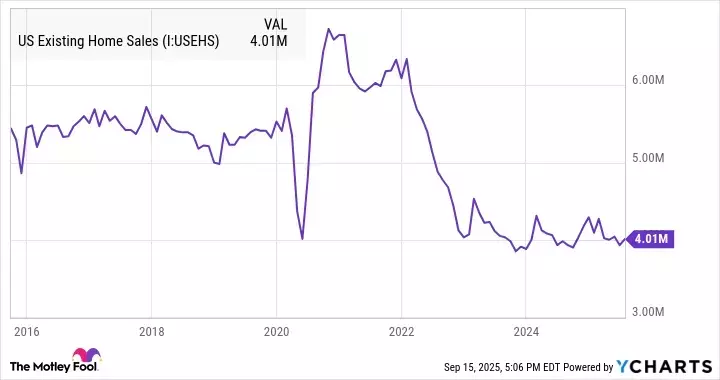
Despite these promising signs, the path to sustained profitability for Opendoor is not without its challenges. While lower interest rates are expected to boost transaction volumes, the impact on home prices, a critical driver of Opendoor's revenue, is less clear. Home prices are currently at historic highs. After a brief dip in 2022, the S&P CoreLogic Case-Shiller U.S. National Home Price Index has climbed to 331.5 as of June, representing a 50% increase since the beginning of the pandemic. The median sales price for a home in July 2025 stood at $422,400. This suggests that while prices could continue to rise, the potential for significant further appreciation might be limited, especially considering the severe housing shortage in the U.S. and an ongoing affordability crisis, where home prices are disproportionately high relative to income levels. Lower mortgage rates could ease monthly payments and draw more buyers into the market. However, this could also lead to an unwinding of the 'lock-in effect' — where homeowners are reluctant to sell due to favorable existing mortgage rates — potentially increasing housing supply and exerting downward pressure on prices. Additionally, a weakening labor market could temper overall demand for home purchases, further complicating price dynamics.
The trajectory of the housing market will unfold over time, with the Federal Reserve maintaining a cautious approach to monetary policy, particularly given that inflation remains above its 2% target. Any indication of an improved macroeconomic environment is likely to positively influence Opendoor's stock. However, the company's ability to capitalize on a more active housing market and achieve consistent profitability remains a key area of uncertainty. As investors recalibrate their expectations for Opendoor, it is crucial to recognize that current home prices are already stretched, which could constrain the extent of the company's future gains.
