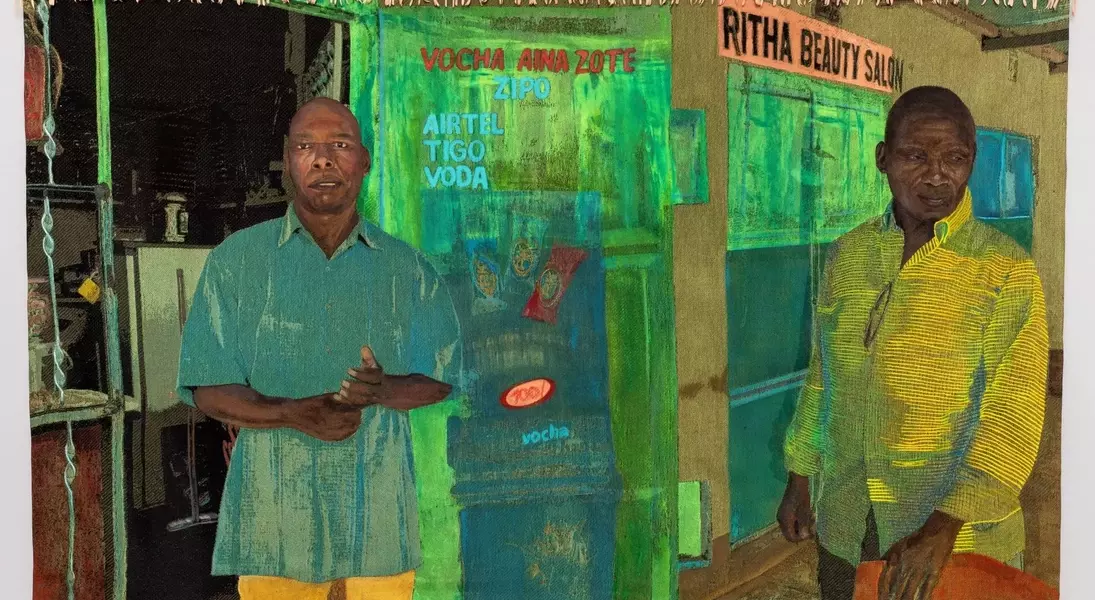
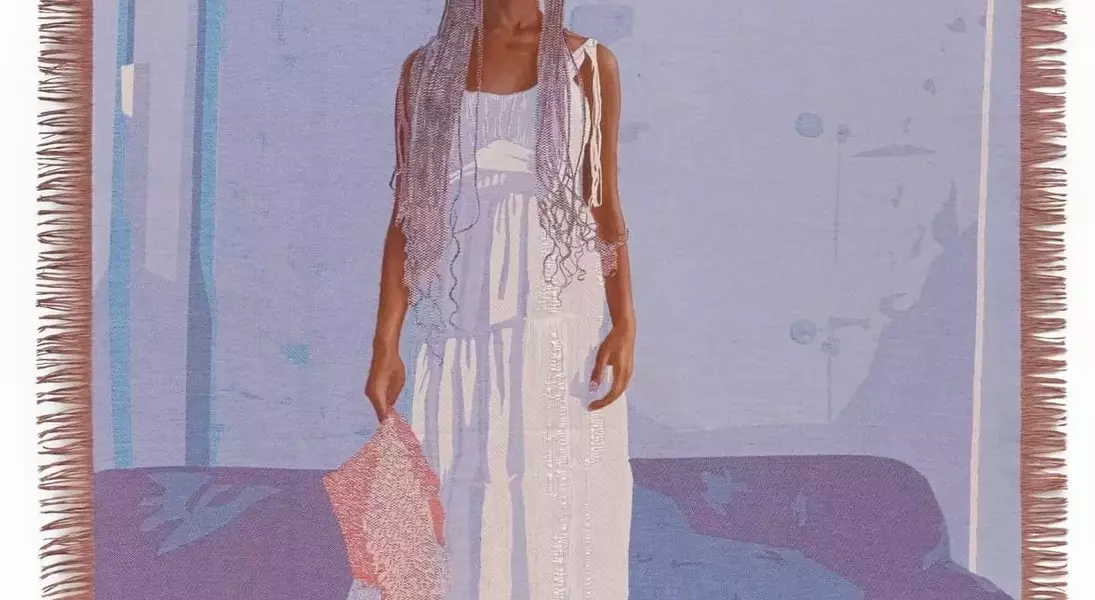
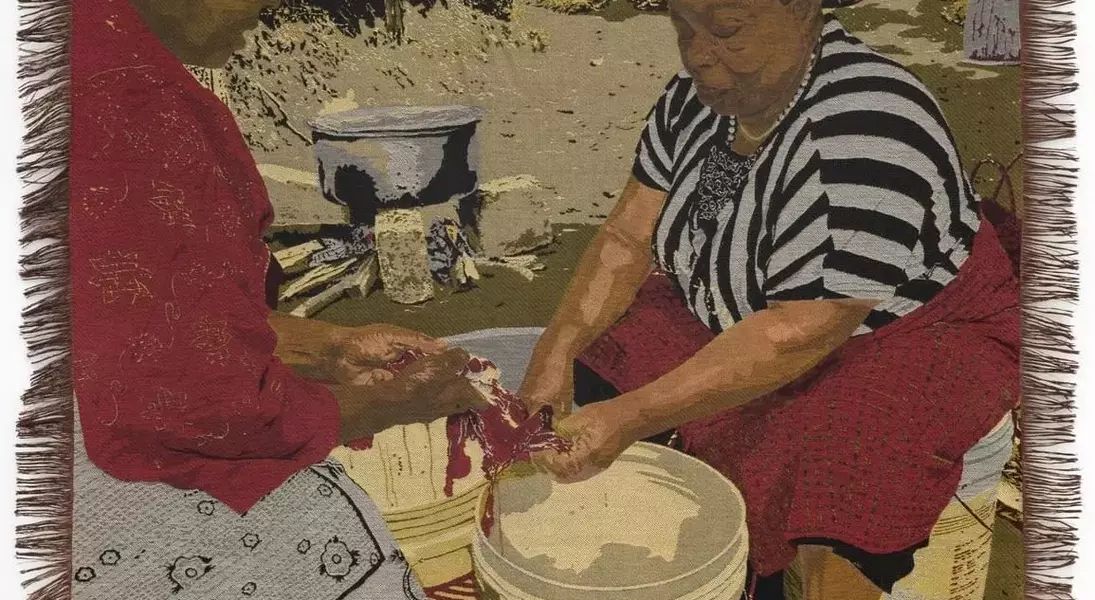
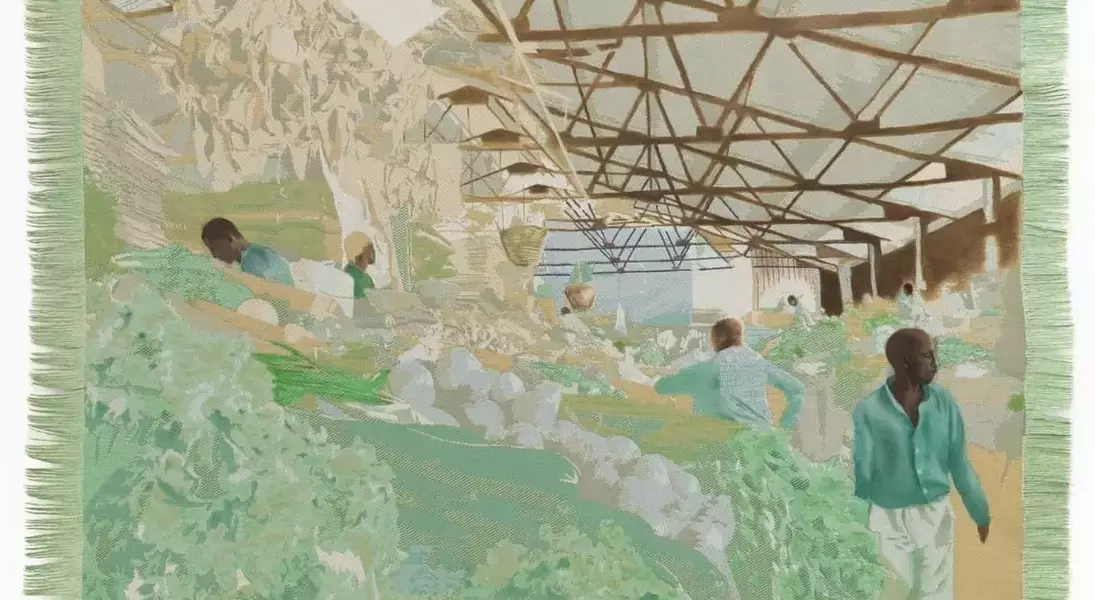
Malaika Temba's artistic practice masterfully navigates the intricate interplay between repose and toil, the personal intimacy of human interaction, and the expansive global frameworks that shape our existence. Through her creations, whether they are small-scale weavings or grand installations, she consistently probes the inherent memories within materials and questions whose stories are preserved through them.
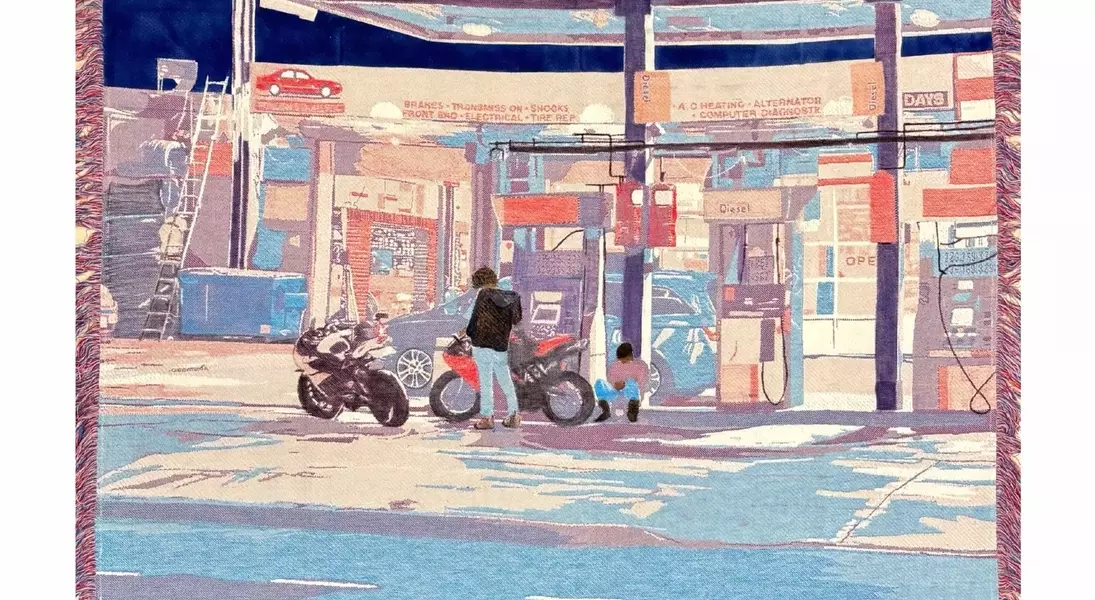
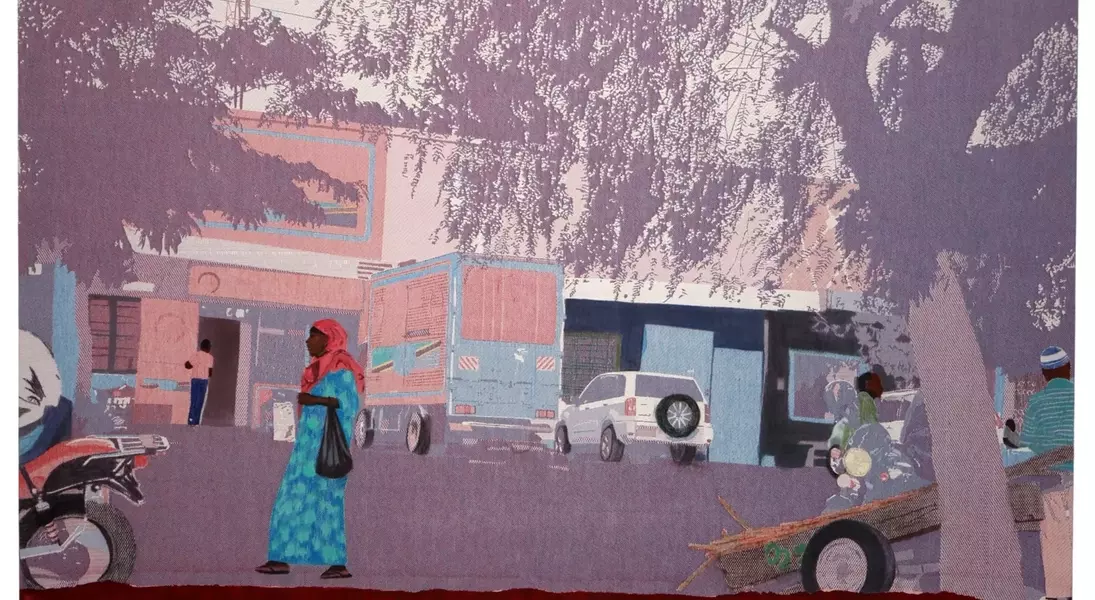
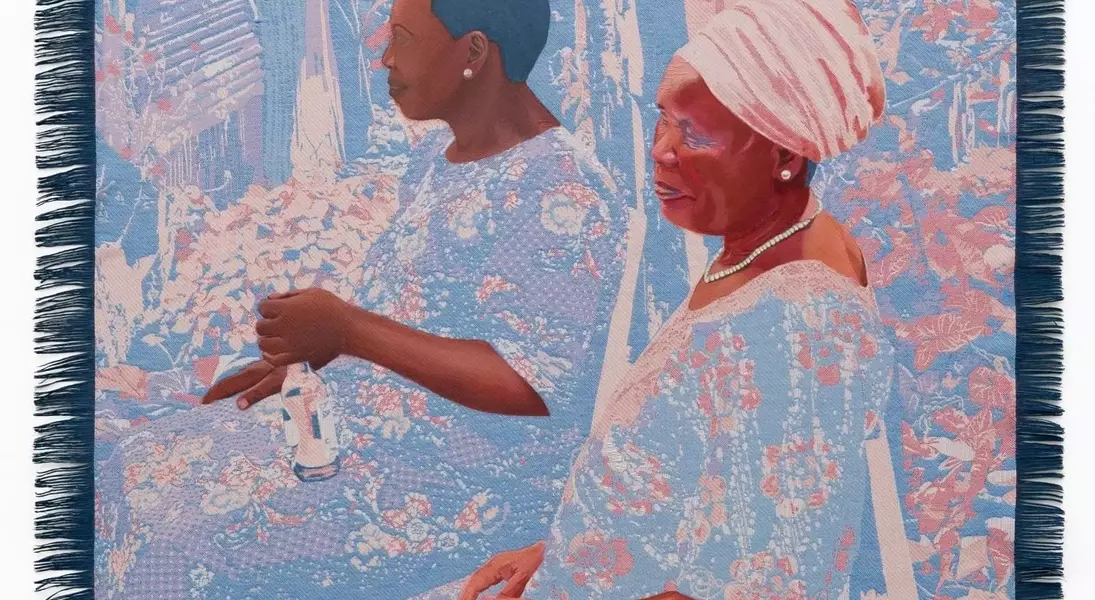
By seamlessly blending digital and traditional methods, Temba crafts richly layered textile pieces that delve into profound topics such as displacement, human effort, societal roles, international commerce, and the nuances of daily existence. Utilizing a Jacquard loom, she meticulously renders evocative portrayals of individuals and familiar urban environments, ranging from friends engaged in conversation to bustling delivery activities and the vibrant rhythm of city life.
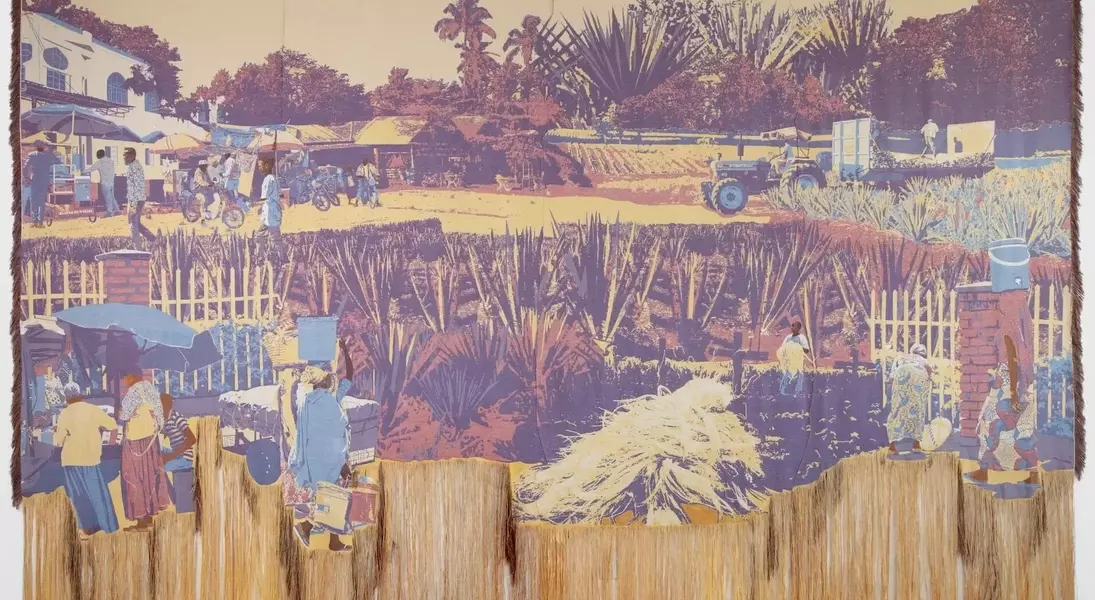
Temba's formative years, marked by residences in diverse locales including Saudi Arabia, Uganda, South Africa, Morocco, and the United States, profoundly influenced her artistic vision. She notes how textiles serve as potent markers of culture, revealing geographical identity through patterns, textures, and the very materials people utilize—whether sourced from nature, acquired through trade, or manufactured industrially. Her artistic journey led her to the Jacquard loom, an apparatus she finds compelling for its dual nature as both an ancient coded technology and a machine capable of remarkable innovation. Recently, her focus has gravitated towards sisal, a cultivated fiber deeply interwoven with the history of labor and trade in Tanzania.
Her current exhibition, 'She Weaves White Gold,' at the North Carolina Museum of Art, features three distinct works presented against elaborate backdrops. In this collection, Temba employs sisal not merely as a medium but as a conceptual anchor, illustrating individuals and communities who embody narratives of work, migration, and resilience across various regions and through complex systems of production and exchange. Following the creation of the primary textile elements, Temba often engages in manual manipulations, such as unraveling sections, applying paint, and silkscreening, to impart a dynamic sense of fluidity and evolution. These layered techniques contribute to the perception that her artworks are perpetually in motion, simultaneously constructed and deconstructed. She observes that her pieces have progressively expanded in scale, incorporating more collage elements and richer textures, thereby encapsulating multiple moments within a single woven tableau. Temba's art serves as a powerful tribute to the lives and contributions of people, particularly those in East Africa. Amidst political tensions in Tanzania and the ongoing conflict in Sudan, she contemplates the significance of visibility, dignity, and the representation of ordinary individuals whose narratives are often oversimplified by headlines or statistics. Through her creative endeavors, she endeavors to decelerate these narratives, asserting the inherent value and deserving recognition of daily life, acts of compassion, the rhythm of labor, and the enduring strength of women.