



This analysis navigates significant market developments, encompassing the Federal Reserve's recent policy decisions, strategic alliances within the technology sector, and innovative investment philosophies. The discussion begins with the Fed's interest rate adjustment and its broader economic ramifications, noting mixed reactions from market participants regarding long-term interest rates and consumer behavior. Shifting to the tech landscape, the article examines NVIDIA's substantial investment in Intel and the unveiling of Meta's advanced AI-integrated eyewear, alongside Google's AI advancements and partnership with PayPal. Concluding the overview is an exploration of the 'Rule Breaker Investing' methodology, emphasizing the importance of identifying and retaining high-growth companies, and a critical look at the emerging concept of 'agentic commerce' and its practical applications.
The Federal Reserve recently opted for a 25 basis point reduction in its benchmark interest rate, a move largely anticipated by financial markets. However, the accompanying commentary from Fed officials highlighted ongoing concerns about both inflationary pressures and a softening economy. This delicate balancing act has led to varied interpretations, with some viewing the rate cut as a necessary stimulus for a weakening economy, while others express apprehension about its potential to exacerbate inflation. Despite the short-term rate cut, long-term interest rates, such as those influencing mortgage markets, saw an unexpected uptick, suggesting that market participants may be factoring in broader economic indicators beyond immediate Fed actions. This divergence underscores a growing skepticism about the Fed's sole ability to steer the economy, pointing to other factors like national debt and global trade policies that significantly impact market dynamics.
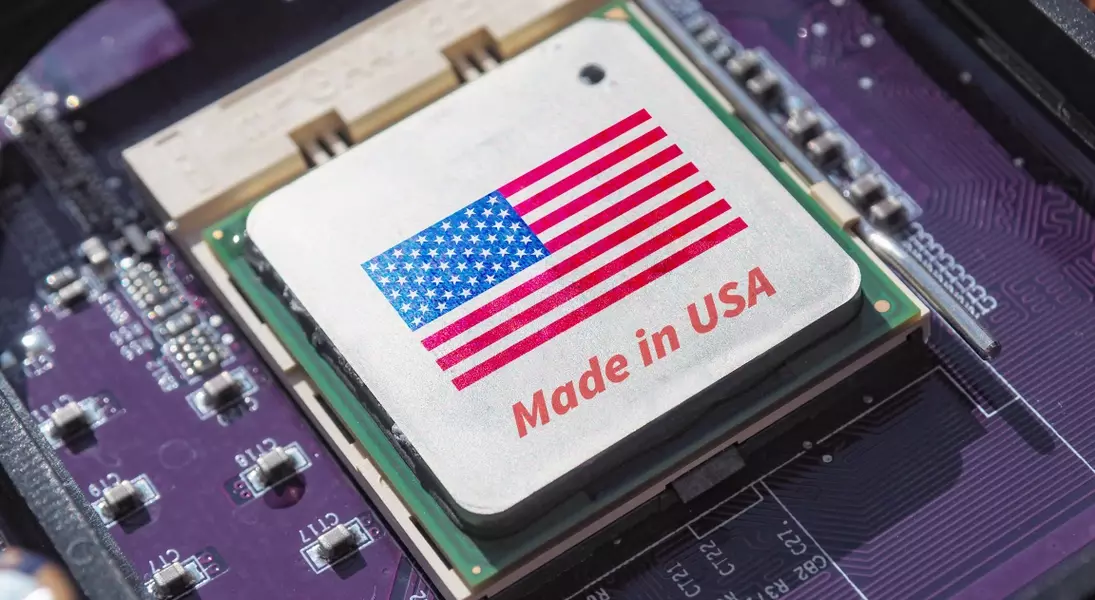
In the technology sector, a notable development was NVIDIA's substantial $5 billion investment in Intel. This strategic partnership aims to foster collaboration on integrating Intel processors with NVIDIA's AI and graphics chips, targeting enhanced solutions for PCs and data centers. While this presents a significant opportunity for Intel to revitalize its position, particularly in the face of intense competition from Advanced Micro Devices (AMD), questions remain about the scale of investment needed for Intel's foundry business to genuinely rival industry leaders like TSMC. The prospect of further investment from major tech entities like Google, Apple, and Amazon has been floated as a potential pathway to establish a robust domestic semiconductor supply chain, building on historical precedents where industry collaborations have rescued critical technology providers.
Meta Platforms also made headlines with the introduction of its new AI-powered Ray-Ban Display glasses. These innovative smart glasses integrate artificial intelligence capabilities, allowing for hands-free interactions such as asking questions about the real world via a camera and responding to messages. While lauded for their technological ambition and CEO Mark Zuckerberg's persistent vision for augmented reality, the practicality and widespread adoption of such devices remain subjects of debate. Critics question whether these glasses offer a compelling value proposition that sufficiently differentiates them from existing smartphone functionalities, especially given their potential for distraction in daily life. The challenge for Meta and other players in this nascent market, including Alphabet and Amazon, lies in identifying "killer applications" that transcend mere novelty and establish a genuine need among consumers, particularly across different generations.
The investment philosophy of 'Rule Breaker Investing,' championed by Motley Fool co-founder David Gardner, continues to resonate within the investment community. This approach emphasizes an optimistic long-term view of the future, focusing on identifying and holding innovative, high-growth companies that have the potential to deliver exponential returns. A core tenet is recognizing that while individual stock losses are capped, the upside potential of successful investments can be enormous. This strategy encourages investors to view stock ownership as forming a long-term partnership with a company, appreciating the culture of innovation and the evolving narrative of a business rather than solely relying on current financial metrics. Examples like Tesla, Amazon, and Netflix, which were once unconventional picks, illustrate how early-stage investments in disruptive companies, held over extended periods, can yield extraordinary results, even when market sentiment or traditional valuations might suggest otherwise.
Furthermore, the article explored the concept of 'agentic commerce,' a new paradigm where autonomous AI agents facilitate shopping experiences on behalf of consumers. Google's collaboration with PayPal on agentic shopping initiatives aims to embed payment solutions across Google's platforms and leverage AI for personalized purchasing. While theoretically promising, the practical implementation and consumer adoption of agentic commerce face considerable hurdles. Historical patterns of over-hyped e-commerce trends, such as metaverse commerce or voice commerce, suggest that widespread acceptance of AI agents for personal shopping might be a distant reality. The more immediate and impactful applications of AI in commerce are likely to be found in optimizing corporate supply chains and automating operational tasks, where efficiency gains can be substantial and the human element of choice is less critical.
In the broader AI landscape, Google is aggressively integrating its Gemini AI products more deeply into Chrome, leveraging its dominant position in the browser market and its Android ecosystem to distribute AI functionalities widely. This strategic move positions Google to compete effectively in the AI arms race, potentially offering AI tools to a vast user base for free, in contrast to the subscription-based models of competitors like OpenAI's ChatGPT. This inherent distribution advantage, coupled with Google's robust advertising business model, could be a decisive factor in shaping the future of AI accessibility and adoption. As the market continues to evolve, these developments highlight the dynamic interplay between technological innovation, economic policy, and evolving consumer and corporate behaviors, painting a complex picture of opportunity and challenge for investors and businesses alike.
