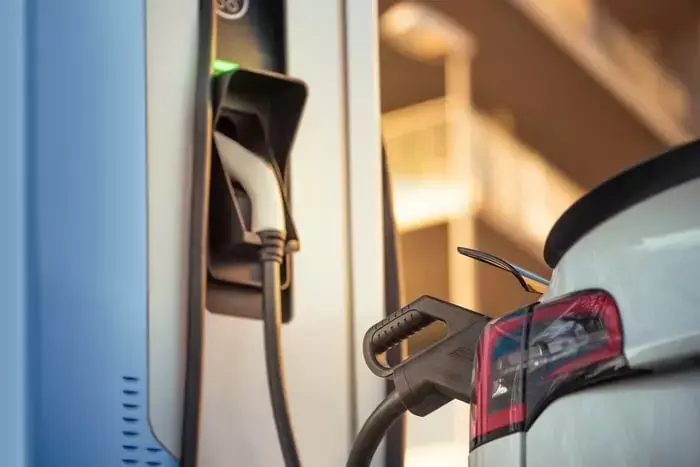
Tesla's shares faced considerable fluctuations throughout 2025, demonstrating a highly dynamic market presence. The company's trajectory in the upcoming year will largely depend on the advancement of its autonomous taxi services and the ramifications of withdrawn government incentives. Analysts are divided on the extent to which robotaxis can elevate Tesla's market value, while the cessation of electric vehicle tax credits and the sale of regulatory credits introduce substantial financial hurdles. The interplay between these innovative aspirations and fiscal realities will be crucial in determining the stock's direction.
The Dual Impact of Robotaxis: Lofty Ambitions vs. Regulatory Hurdles
Tesla's stock has been on a roller coaster ride throughout the past year, marked by significant drops and impressive rallies. A key driver for future growth, and a source of considerable investor excitement, is the potential of Tesla's robotaxi service. While some market watchers envision these autonomous vehicles adding trillions to Tesla's market cap by 2026, the reality on the ground presents a more gradual progression. The initial pilot program in Austin, Texas, though promising, remains geographically limited and still requires human oversight, highlighting the technological and regulatory complexities that lie ahead. The widespread adoption and expansion of this innovative service face ongoing challenges, including navigating diverse regulatory landscapes and overcoming technical limitations before a fully autonomous system can be deployed.
Despite the optimistic forecasts from prominent investors and analysts regarding the transformative power of robotaxis, the path to full-scale implementation is fraught with obstacles. The pilot launch in Austin has been met with positive initial reactions, but the service's constrained operational area and the continued reliance on human supervisors underscore the developmental stage of the technology. Reports of planned expansions, such as in San Francisco, are contingent on regulatory approvals that have yet to materialize. This gap between ambitious projections and current operational realities suggests that while investor enthusiasm for robotaxis could temporarily boost Tesla's valuation, a sustained increase in market capitalization will necessitate tangible progress in real-world deployment and the overcoming of significant regulatory and technological barriers. The company's ability to evolve its autonomous driving capabilities and gain broader acceptance will be critical in realizing the full financial potential of this venture.
Navigating Financial Headwinds: The Discontinuation of Key Subsidies
As Tesla looks to 2026, it must contend with the significant financial implications of discontinued government subsidies. The cessation of a substantial tax credit for electric vehicle purchasers will undoubtedly cool demand for EVs, directly affecting Tesla's sales volume. Furthermore, the elimination of regulatory credit sales, which historically provided a lucrative revenue stream with high-profit margins, will remove a substantial source of supplemental income. These changes come at a challenging time, with projections already indicating a potential decline in Tesla's sales for the current fiscal year. The confluence of these factors creates a formidable financial headwind for the company, forcing it to adapt its business model and operational strategies in a less favorable economic environment. The market's response to these financial pressures, alongside the anticipation for robotaxi developments, will be pivotal in shaping Tesla's stock performance.
The removal of the federal EV tax credit, a benefit valued at up to $7,500 per vehicle, is expected to exert downward pressure on consumer demand for electric vehicles, thereby impacting Tesla's sales figures. Concurrently, the termination of the automotive regulatory credit system represents another significant blow to Tesla's profitability. For over a decade, the company generated billions by selling these credits to other manufacturers, who needed them to meet emission standards. With the elimination of fines for non-compliance, the incentive for manufacturers to purchase these credits vanishes, effectively rendering them worthless. This dual blow to revenue and profit margins, coupled with an anticipated 5% decrease in sales for the current fiscal year, signals a challenging period for Tesla's core business. The crucial question for investors is whether the excitement surrounding future robotaxi endeavors can sufficiently offset the tangible financial pressures stemming from the loss of these established income streams, ultimately influencing the stock's valuation in the short to medium term.
