
Nvidia, currently the most valuable corporation globally, has demonstrated remarkable financial performance in recent years. However, a significant portion of its impressive revenue growth is tied to a small number of prominent clients. This reliance on a concentrated customer base introduces a degree of vulnerability, particularly given the company's elevated market valuation and the high expectations associated with it. Should these key clients reduce their artificial intelligence-related expenditures, Nvidia's growth trajectory could be substantially impacted, potentially leading to a market correction for its stock.
Nvidia's financial success has been largely propelled by its data center division, which accounts for a substantial 88% of its total revenue. Within this segment, the company's advanced AI chips are primarily purchased by a select group of major technology firms, often referred to as hyperscalers. The concentration of sales is stark: two major unnamed customers alone contribute a significant portion of Nvidia's revenue, and a mere six direct clients collectively drive approximately 85% of its sales. This deep dependency on a limited number of buyers means that any shift in their spending habits could have amplified consequences for Nvidia's financial health.
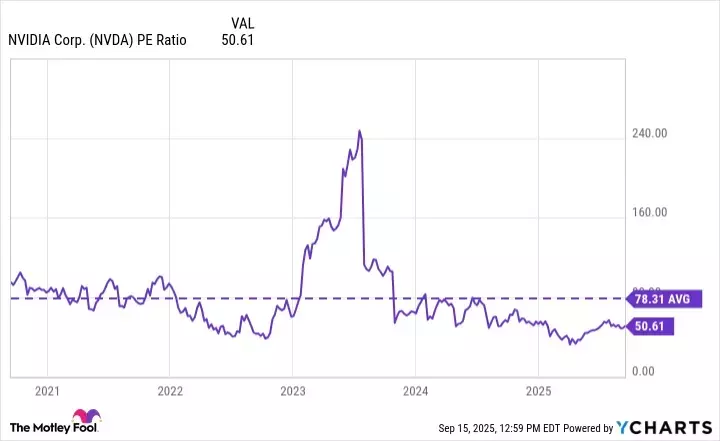
Despite a slight decrease in its price-to-earnings multiple over the past year, Nvidia's stock continues to trade at a premium, currently exceeding 50 times earnings. This high valuation implies that investors anticipate sustained exceptional growth. However, recent stock performance indicates some investor hesitation, with a nearly 6% decline over the past month. This suggests that market participants are keenly aware of the macroeconomic uncertainties and the potential for a slowdown in AI investments, which could temper Nvidia's future growth prospects. The company's impressive 50% revenue and profit increases in the last quarter, while robust, have not been enough to offset concerns about its concentrated revenue streams.
Nvidia's journey over the past five years has delivered exceptional returns to investors, with an astounding increase of nearly 1,300%. As the company now holds the top spot as the world's most valuable, questions naturally arise about the sustainability of such rapid expansion. While Nvidia boasts a strong business foundation and healthy profit margins, with significant long-term growth potential in the AI sector, investors should exercise caution. Holding the stock for an extended period, such as five years, may still yield positive results, but anticipating a potential near-term market correction due to its concentrated customer base and lofty valuation is a prudent approach.
