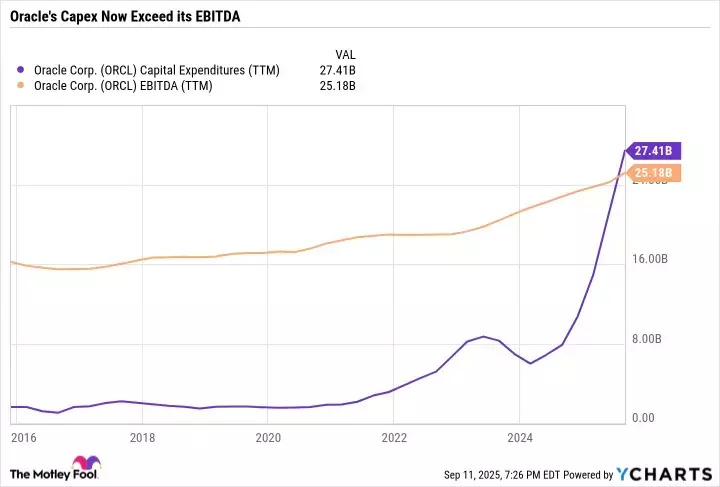

Larry Ellison, co-founder, chairman, and CTO of Oracle, maintains a substantial ownership stake in the company, reflecting his deep commitment to its future. This strong personal investment serves as a significant indicator for long-term shareholders. Oracle is currently undertaking a highly ambitious strategy to significantly expand its cloud infrastructure, aiming to surpass the revenue generated by major industry players. This bold move, spearheaded by Ellison, involves considerable capital investment and carries inherent risks, yet also presents a unique opportunity for market disruption in the rapidly evolving technology landscape.
Oracle's transformation from a traditional database and software provider to a leading cloud computing entity is a testament to its founder's vision. This strategic pivot, while requiring substantial financial outlay and increasing the company's debt, demonstrates a forward-thinking approach that could redefine its market position. Ellison's active role in guiding this transition provides a powerful signal to investors, suggesting that the company is steered by an individual with a profound understanding of its core business and a vested interest in its long-term success. The success of this capital-intensive endeavor will be crucial in determining Oracle's trajectory in the competitive cloud sector.
Larry Ellison's Visionary Leadership and Oracle's Strategic Direction
Larry Ellison, Oracle's co-founder, chair, and CTO, holds a substantial ownership percentage in the company, demonstrating his unwavering belief in its future. His significant stake aligns his personal wealth directly with Oracle's performance, providing a clear 'green flag' for investors seeking long-term growth. The company's recent surge, partly fueled by a highly ambitious five-year plan for its Oracle Cloud Infrastructure (OCI), underscores the impact of Ellison's strategic influence. This roadmap aims to dramatically scale OCI's annual revenue, projecting it to exceed the current figures of established cloud leaders like Amazon Web Services, Microsoft Azure, and Google Cloud. This aggressive expansion strategy is a bold declaration of Oracle's intent to become a dominant force in the cloud computing market, driven by its founder's enduring commitment.
Ellison's deep involvement in Oracle's strategic direction, particularly in its capital-intensive cloud infrastructure build-out, is a critical element of its investment thesis. Unlike many founders who reduce their holdings over time, Ellison has maintained a massive stake, signifying his continued confidence and active participation in the company's evolution. This commitment is particularly relevant in the dynamic technology sector, where founder-led companies often exhibit greater agility and innovation. Oracle's transformation from a legacy software provider to a cutting-edge cloud giant requires substantial investment in data centers and technology, leading to increased capital expenditures and debt. However, Ellison's willingness to 'put his chips on the table' for this long-term bet provides a powerful vote of confidence, indicating that he sees these investments as essential for securing Oracle's future leadership in the hyper-efficient cloud computing arena. His unique position, akin to a founder remaining at the helm and holding a significant stake in a major tech company, offers a distinct advantage for Oracle in navigating the complexities of market disruption.
Oracle's Capital-Intensive Cloud Expansion and Market Disruption
Oracle is aggressively pursuing a capital-intensive strategy to build out its cloud infrastructure, a move that is reshaping its business model and challenging established players in the cloud computing industry. This approach, while increasing Oracle's debt and capital expenditures, is a deliberate effort to position the company at the forefront of cloud innovation. The aim is to create a hyper-efficient cloud computing ecosystem that can compete directly with the offerings of Amazon, Microsoft, and Alphabet. This bold investment reflects a belief that, despite the immediate financial strain, this strategic shift will yield significant long-term growth and market leadership in the rapidly expanding cloud sector.
The company's substantial investments in data centers and related infrastructure represent a calculated risk. While such high capital outlays can impact short-term earnings and cash flow, Oracle views them as necessary to achieve its ambitious growth targets and establish a competitive edge. This strategy contrasts with the capital-light models favored by some other tech giants, yet it underscores Oracle's commitment to building a robust and cutting-edge cloud offering. The success of this capital-intensive expansion hinges on its ability to disrupt the existing cloud market and attract a significant share of new business. For investors who are tolerant of risk and seek companies with strong founder-led initiatives, Oracle's current trajectory, driven by its founder's long-term vision, may present a compelling opportunity for substantial returns as it continues to innovate and capture market share in the evolving cloud landscape.
