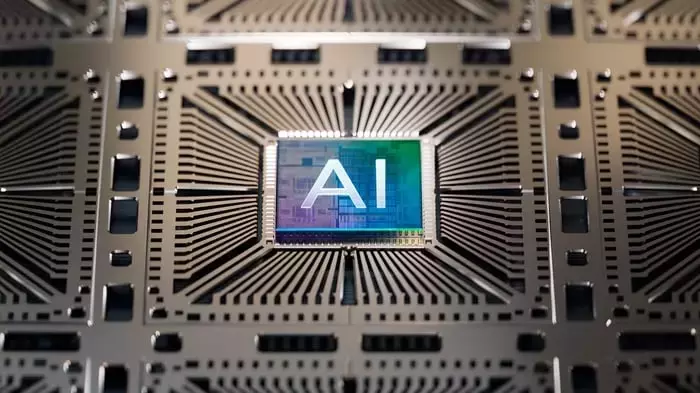
In the rapidly expanding field of artificial intelligence, two companies, Advanced Micro Devices (AMD) and Marvell Technology, are carving out significant niches for themselves, despite often being overshadowed by market leaders like Nvidia and Broadcom. These overlooked chipmakers are strategically positioning themselves to benefit from the evolving demands of AI infrastructure, particularly as the focus shifts from AI model training to inference.
AMD, a long-standing competitor in the graphics processing unit (GPU) market, is making substantial inroads in the AI inference sector. While Nvidia has historically led in GPU development, AMD's enhanced ROCm software platform is proving highly competitive for inference workloads. The company's hardware is already in use by a significant portion of top AI operators, demonstrating its growing influence. The transition from training AI models, a one-time event, to performing inference, a continuous process, creates a persistent and increasing demand for efficient inference chips. AMD's ability to offer cost-effective and high-performance solutions in this domain gives it a strong competitive edge. Furthermore, AMD's co-founding of the UALink Consortium presents a potential challenge to Nvidia's proprietary NVLink, fostering an open standard that could grant customers greater flexibility in multi-GPU system configurations.
Marvell Technology, another key player, is distinguishing itself in the custom AI chip design space. The company has secured multi-generational design wins with major clients, including Amazon, whose Graviton and Trainium chips incorporate Marvell's intellectual property and interconnect technology. There are also indications of Marvell's involvement in Microsoft's new Maia chip, further solidifying its position. Despite recent stock fluctuations linked to customer contract dynamics, Marvell has successfully diversified its client base, securing numerous custom compute sockets with leading hyperscalers. These socket wins represent long-term revenue opportunities, as each new generation of custom chips is rolled out.
A significant aspect of Marvell's growth strategy lies in the burgeoning XPU Attach market, which involves companion chips supporting AI accelerators. This market is projected to experience hypergrowth, offering Marvell a substantial addressable market share. Both AMD and Marvell are demonstrating that while initial AI infrastructure build-outs might create intermittent demand, their focus on efficiency, open standards, and custom solutions positions them for sustained success in the long run. As the AI landscape matures, these companies are set to emerge as crucial contributors to the next phase of AI adoption, challenging the established order with innovative and competitive offerings.
Both Advanced Micro Devices and Marvell Technology are poised for significant expansion within the AI chip industry. AMD's strategic pivot to inference, coupled with its evolving software platform and collaborative initiatives, directly addresses a critical and growing need in AI processing. Marvell's deep engagements in custom AI chip design, particularly with major cloud providers and in high-growth segments like XPU Attach, underscore its capacity to capitalize on the increasing demand for specialized hardware. These companies, though not always in the spotlight, are making profound contributions to the technological underpinnings of artificial intelligence, indicating a future where their market presence will likely grow substantially.
