
After a seven-year closure, the Studio Museum in Harlem triumphantly reopens its doors in a striking new building, marking a significant moment in the cultural landscape. The institution, under the dedicated leadership of director Thelma Golden, has expanded its physical presence and curated an inaugural exhibition, "From Now: A Collection in Context," that thoughtfully reflects its foundational mission. This revitalization underscores the museum's enduring commitment to artists of African descent and its profound impact on the art world, both locally and internationally, even as it navigates a changed sociopolitical environment.
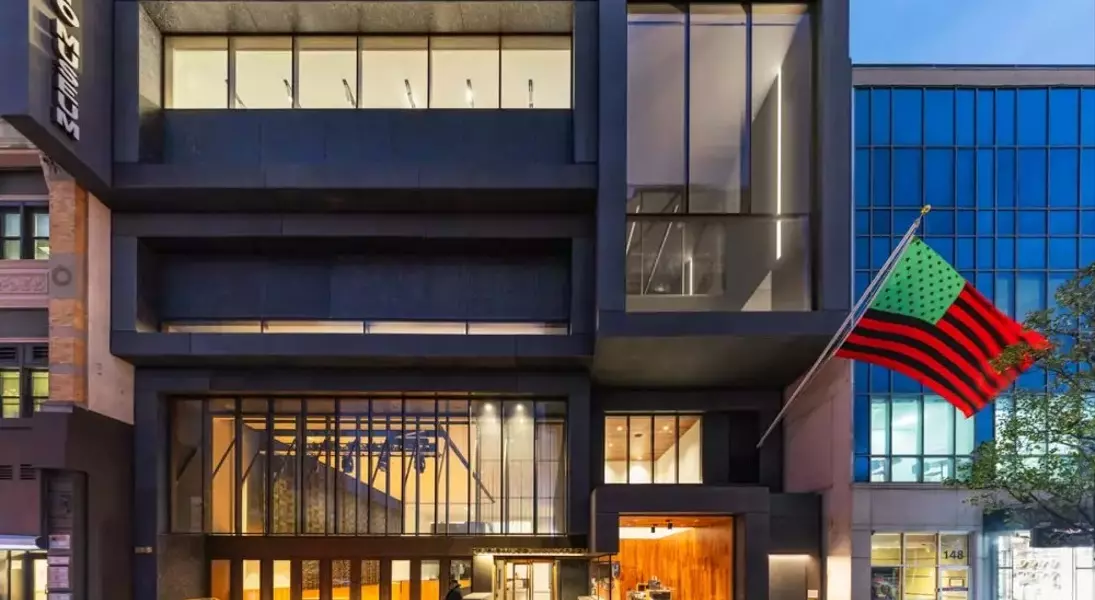
The journey to this grand reopening was not without its challenges. The Studio Museum has returned to a Harlem that has experienced considerable gentrification, with major commercial establishments now flanking its location. The visionary architect David Adjaye designed the new structure, initiated eight years prior to its completion. Despite recent allegations of misconduct against Adjaye, which led some institutions to distance themselves from him, the new building itself stands as an architectural achievement. The Studio Museum has confirmed that Pascale Sablan, CEO of Adjaye Associate's New York office, took over the project's completion, though Adjaye remains listed as a principal on the firm's website. The building's design, characterized by its delicate concrete facade, harmonizes with the surrounding urban fabric of both historic and contemporary Harlem, punctuated by David Hammons's iconic red, black, and green "Untitled Flag" (2004) at its entrance.
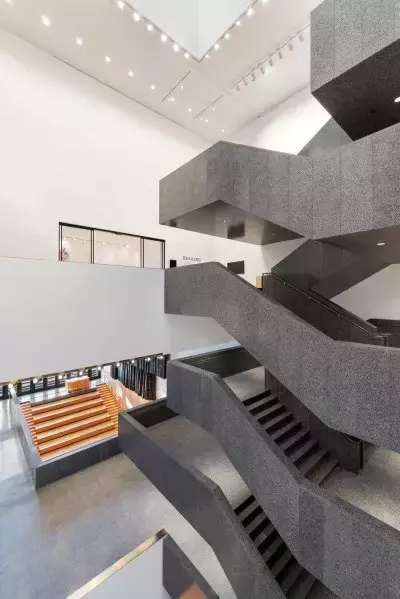
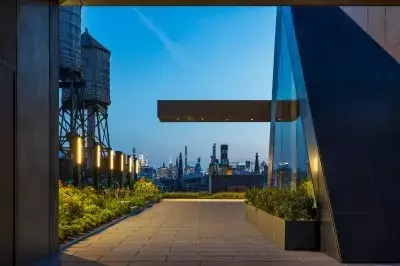
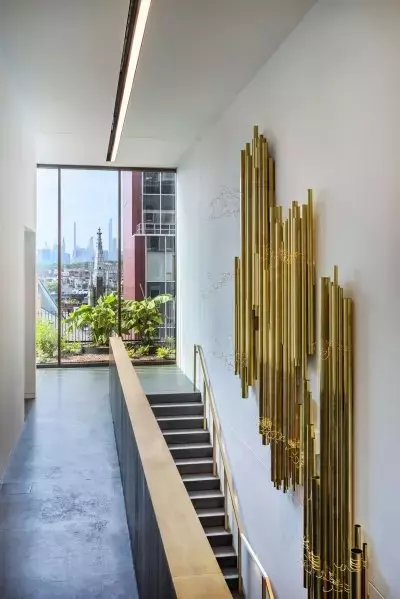
Inside, the museum's design thoughtfully addresses its previous space constraints. The former garden has been replaced by an expansive internal staircase, known as the Stoop, which serves as a public gathering area for discussions and performances. A magnificent terrazzo-clad staircase gracefully ascends to the upper levels, and light wood paneling throughout the interior contributes to a warm and inviting atmosphere. The top floor features a rooftop terrace offering panoramic views of the New York City skyline, bringing the museum into closer dialogue with its urban surroundings, although currently lacking large-scale outdoor art installations.
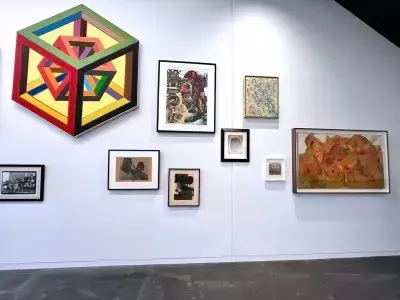
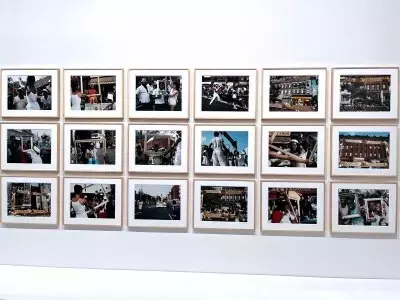
The "From Now: A Collection in Context" exhibition is a maximalist display of the museum's permanent collection, showcasing three times the number of works previously possible. This extensive presentation emphasizes the museum's crucial role as a repository for art by Black artists, a function it embraced at a time when mainstream institutions often overlooked such works. The collection, which includes significant acquisitions like Jean-Michel Basquiat's "Bayou" (1984), acquired through a gift in 2023, positions the Studio Museum as one of the few U.S. institutions to own a Basquiat piece. The exhibition is organized into eleven thematic sections, with "1968" particularly highlighting the diverse artistic responses to the tumultuous late 1960s, a period that underscored the necessity of a dedicated museum for Black art.
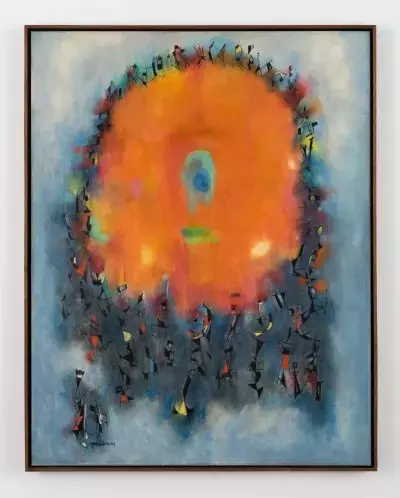
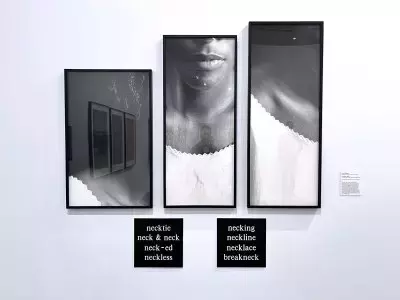
Notable works within the collection include Al Loving's "Hex 4" (1968), LeRoy Clarke's "Now" (1970), and contributions from artists such as Romare Bearden, Elizabeth Catlett, and Sam Gilliam. The exhibition also features powerful pieces like Kerry James Marshall's "Silence is Golden" (1980) and Lorna Simpson's "Necklines" (1989), which explore themes of visibility and invisibility within the African American experience. The inclusion of works from its artists-in-residence program, such as Paul C. Gardère's "Conflict" (1990) and Grace Williams's "Black Balled" (2005), further demonstrates the museum's commitment to nurturing emerging talent and showcasing art that reflects the complex tapestry of American history.
The new Studio Museum transcends a mere structured gathering; it fosters a sense of community and dialogue, with its diverse collection creating a chorus of harmonizing voices. This reopening reaffirms the museum's long-established influence, not just in expanding the art canon but also in broadening perspectives and fostering deeper understanding of art and life. The work of championing artists of African descent continues, now with renewed vigor and an impressive new home.