
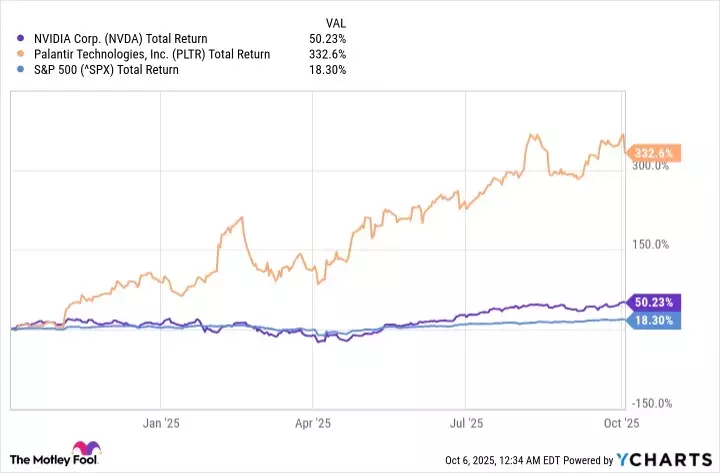

In the current market, artificial intelligence continues to be a primary catalyst for growth, with numerous companies leveraging AI to gain a competitive edge. While high-profile AI firms like Nvidia and Palantir Technologies have already demonstrated significant gains, there are still undervalued opportunities for investors seeking to capitalize on this transformative technology. This analysis delves into three key players—Alphabet, Amazon, and Taiwan Semiconductor—each contributing uniquely to the AI revolution and presenting strong long-term investment prospects.
Alphabet, the parent company of Google, extends far beyond its dominant search engine. It is pioneering AI advancements through its Gemini large-language model, enhancing internet search capabilities and offering sophisticated AI solutions to advertisers for optimizing campaign performance and boosting returns. Additionally, Alphabet's cloud computing services empower clients to develop their own AI applications, showcasing the versatility and breadth of its AI integration. Major corporations like Target and Wayfair are already utilizing Google Cloud's AI to process data, customize user experiences, and bolster cybersecurity measures. With diverse revenue streams, including hardware and self-driving cars, Alphabet recorded a 14% year-over-year revenue increase in the second quarter of 2025. This growth trajectory, combined with a robust operating income margin of 32.4%, underscores its strong financial health and promising future in an AI-driven economy. Despite its impressive performance and growth potential, Alphabet's stock is currently trading at a P/E ratio of 26 times trailing-12-month earnings, suggesting an attractive entry point for investors.
Amazon stands as an unparalleled leader in both e-commerce and cloud computing, a powerful synergy that positions it advantageously in the AI era. E-commerce still represents a minority of total retail spending in the U.S., but Amazon commands approximately 40% of this market. As online retail expands, Amazon is naturally set to benefit, further solidifying its market dominance through customer loyalty programs like Prime, which offer expedited fulfillment times, with same or next-day deliveries increasing by 30% year over year in the second quarter. The company's generative AI endeavors are primarily housed within its Amazon Web Services (AWS) cloud division, which boasts a substantial $123 billion run rate. CEO Andy Jassy believes this segment is still in its nascent stages, indicating vast untapped potential. Amazon's stock, currently trading at a P/E ratio of 34, while higher than others on this list, remains below its historical averages over the past one, three, and five years.
Taiwan Semiconductor Manufacturing Company (TSMC) is fundamental to the AI ecosystem, producing the advanced chips that power artificial intelligence. While companies like Nvidia design these chips, TSMC is the manufacturing giant that brings these designs to fruition, giving it extensive exposure to various AI sectors. Beyond AI, TSMC supports diverse industries such as gaming and autonomous vehicles, providing a stable foundation for its business. However, AI has emerged as its largest segment, contributing 60% of total sales and experiencing a 14% year-over-year increase in the second fiscal quarter of 2025. Overall, TSMC's revenue surged by 44% compared to the previous year, with impressive expansions in both gross and operating margins, reaching 58.6% and 49.6% respectively. To mitigate tariff challenges and expand its global footprint, TSMC is establishing a new production facility in Arizona, further enhancing its capacity to support and benefit from ongoing AI advancements. With a P/E ratio of 33, Taiwan Semiconductor's stock offers an appealing entry point for new investors looking to invest in the core infrastructure of the AI revolution.
In summary, investing in the artificial intelligence sector offers significant opportunities for growth. Companies like Alphabet, Amazon, and Taiwan Semiconductor exemplify how diverse businesses can leverage AI to create value and drive innovation. From enhancing search and cloud services to manufacturing critical components, these companies are not only leading the charge in AI but also present compelling valuation metrics for investors seeking long-term gains in this rapidly evolving technological landscape.
