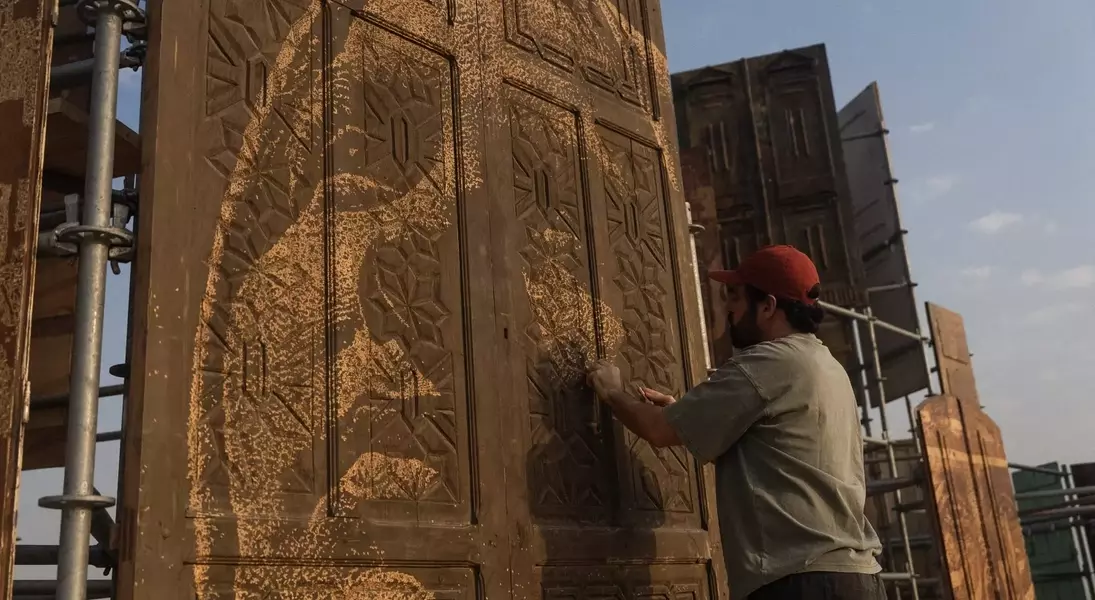
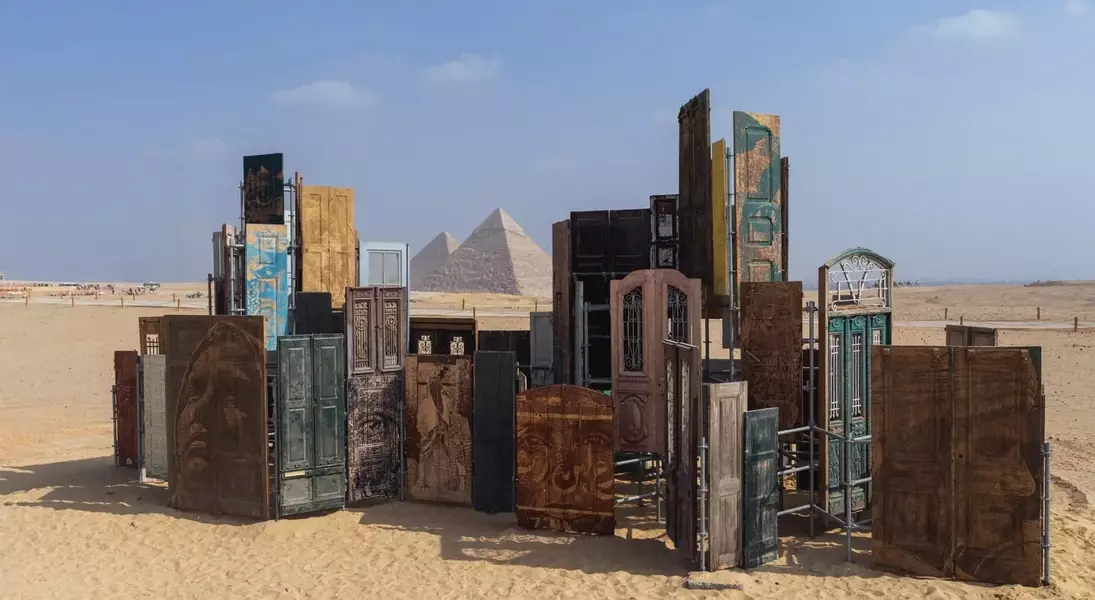
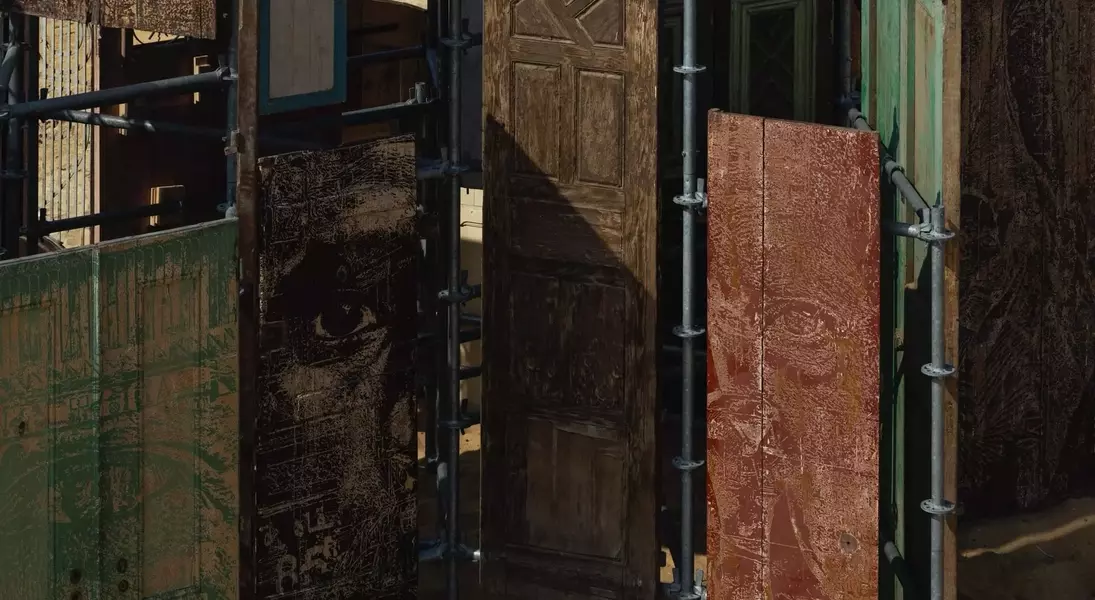
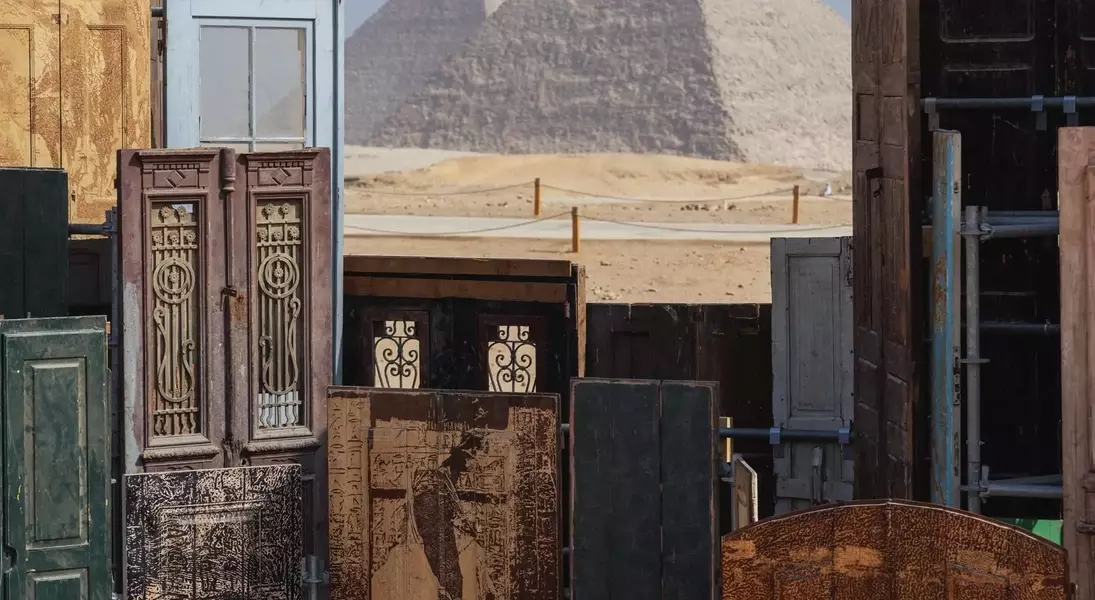
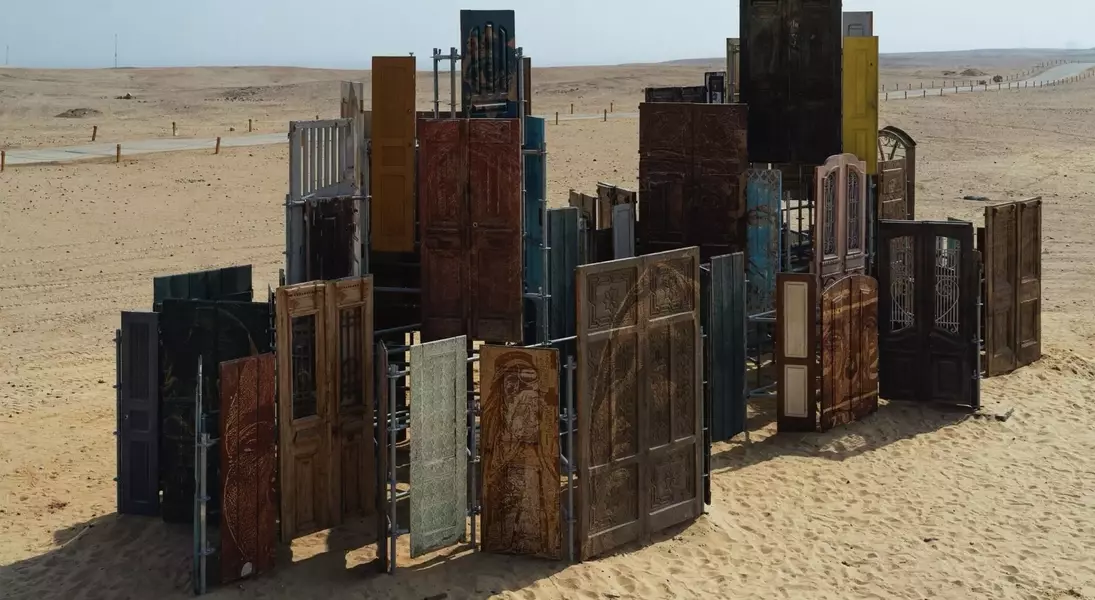
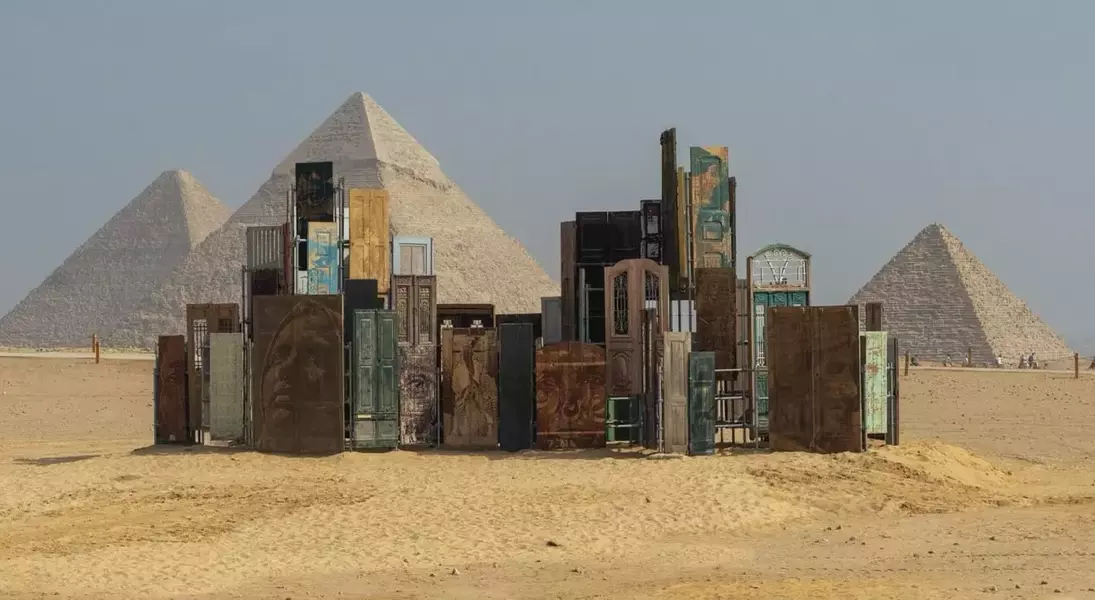
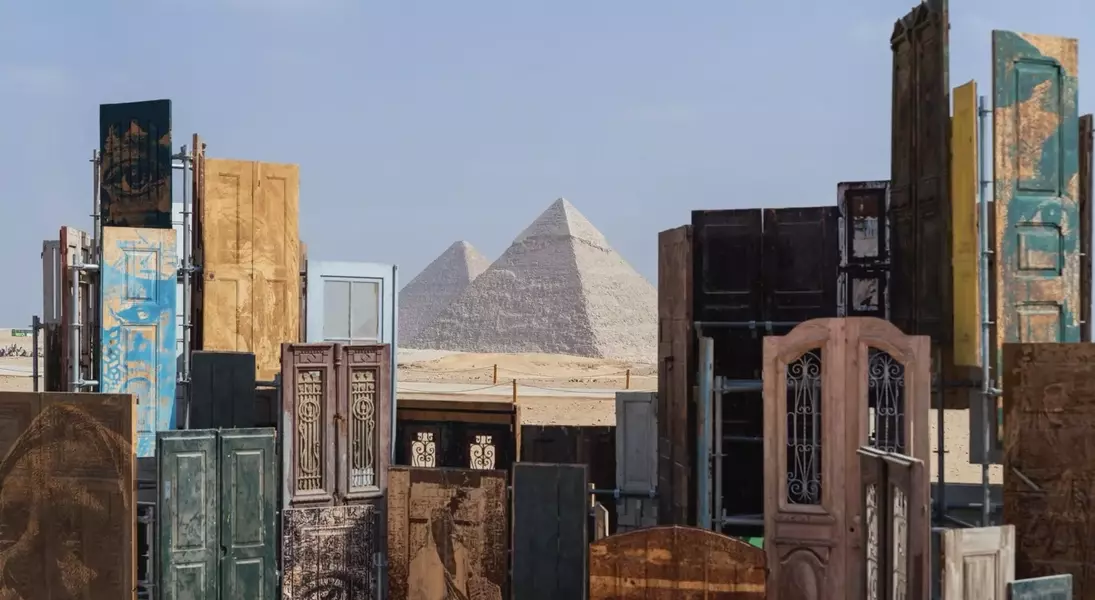
In a profound juxtaposition of the ephemeral and the eternal, Portuguese artist Alexandre Farto, known as Vhils, has unveiled his latest site-specific installation, "Doors of Cairo," against the majestic backdrop of the Giza Pyramids. This thought-provoking work, comprising 65 re-purposed doors sourced from both Portugal and Egypt, features Vhils' signature etched portraits. Each door, bearing the marks of its former life through chipped paint and worn surfaces, tells a silent story, collectively forming a monumental tribute to the human experience. The artwork challenges viewers to contemplate the nature of permanence and the transient imprints left by everyday lives, drawing a parallel between the fleeting presence of the installation and the millennia-old endurance of the pyramids. This project underscores the universal human impulse to create, remember, and leave a lasting trace, bridging diverse cultures and eras through a shared artistic vision.
The "Doors of Cairo" Exhibition: A Dialogue Between Eras and Cultures
From November 12 to December 7, 2025, Portuguese artist Vhils' evocative installation, "Doors of Cairo," transformed the desert landscape near the iconic Giza Pyramids. This significant artwork, a central component of the fifth "Forever Is Now" project curated by Art D'Égypte with UNESCO's backing, showcased 65 reclaimed doors. These doors, originating from demolition and renovation sites in both Portugal and Egypt, were meticulously carved by Vhils over six months in his studio, culminating in three days of on-site assembly and refinement. The fragmented faces etched into the aged wood serve not as specific likenesses, but as symbolic representations of collective human experience, reflecting how individual and communal memories are interwoven into the fabric of existence. Vhils articulates his artistic philosophy, stating, "A single face can represent one person, but it can also stand for a community, a generation, or a shared emotional landscape." The installation, a poignant dialogue between the temporary nature of human life and the enduring legacy of ancient civilizations, invites contemplation on identity, memory, and the powerful connection between people and places.
Vhils' "Doors of Cairo" offers a compelling meditation on the human condition and our innate desire to create meaning and legacy. The work masterfully intertwines individual narratives with a universal theme, prompting reflection on the transient beauty of existence and the enduring power of memory. This installation serves as a reminder that even in our most fleeting creations, we echo the grand ambitions of those who built monuments for eternity, leaving behind echoes of our shared humanity that resonate across time and space.
