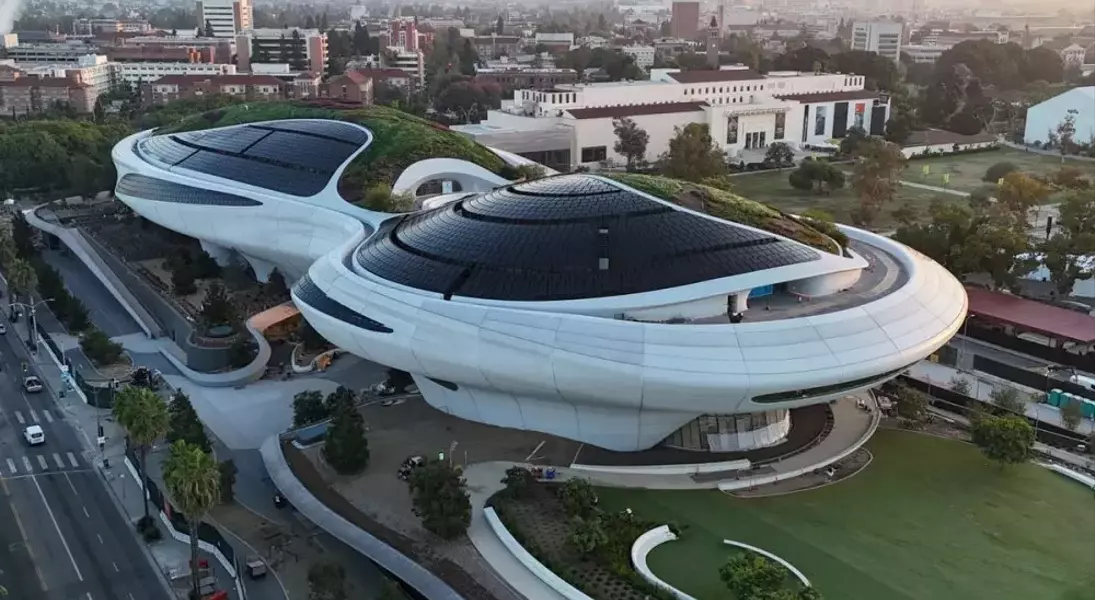
The Lucas Museum of Narrative Art in Los Angeles, an ambitious project spearheaded by filmmaker George Lucas and Ariel Investments co-CEO Mellody Hobson, has officially set its public debut for September 22, 2026. This announcement marks a significant milestone following over a decade of planning, site selection, and construction.
A Decade in the Making: The Unveiling of a Visionary Art Space
The Journey to Los Angeles: A Museum's Evolution
Initially conceived more than ten years ago, the Lucas Museum embarked on a quest to find its permanent home, considering various locations such as San Francisco and Chicago. Ultimately, the founders decided on Los Angeles, securing a prime spot in Exposition Park in 2017, with construction commencing the following year. The building, a distinctive design by Ma Yansong of MAD Architects, faced multiple construction setbacks, initially slated for a 2021 opening, then postponed to 2023, 2025, and finally, 2026. This latest announcement provides a definitive timeline after earlier, less specific delays.
A Collection Focused on Visual Storytelling: From Fine Art to Pop Culture
The museum's holdings have grown to encompass an impressive collection of over 40,000 artifacts, all curated around the concept of "narrative art" – a broad category that celebrates visual storytelling in its myriad forms. This includes traditional fine art alongside elements of popular culture, such as comic books and movie posters. A significant portion of the collection comprises the Lucas Archives, featuring models, props, concept art, and costumes from George Lucas's cinematic endeavors. The founders' dedication to expanding this collection has consistently earned them a place on ARTnews's prestigious Top 200 Collectors list since 2020.
Diverse Artistic Voices: A Rich Tapestry of Narrative Art
The collection showcases a wide array of artists, including renowned figures like Frida Kahlo, Diego Rivera, Jacob Lawrence, and Mary Cassatt, among many others. The museum has also made headlines with its high-profile acquisitions, such as Norman Rockwell's iconic works, Saying Grace (1951) and Shuffleton's Barbershop (1950), purchased for significant sums. Another notable acquisition was Robert Colescott's influential George Washington Carver Crossing the Delaware: Page from an American History Textbook (1975), which fetched $15.3 million at auction.
Founders' Vision: Art for Everyone
Mellody Hobson articulated the museum's core philosophy, stating that it represents "the people's art," reflecting the beliefs and experiences that shape daily life. She emphasized that this art belongs to everyone, expressing a hope that visitors will find their own humanity mirrored within the galleries. George Lucas echoed this sentiment, highlighting the fundamental role of stories and mythology in helping humanity comprehend the complexities of existence, with art serving as a powerful illustrator of these narratives.
Recent Institutional Shifts: Leadership and Staffing Adjustments
The museum has also navigated a period of organizational change throughout the current year. Sandra Jackson-Dumont, who previously served as the director and CEO and was recruited from the Metropolitan Museum of Art, stepped down in February. Her departure led to a restructuring where George Lucas assumed the role of "content direction," and Jim Gianopulos, a veteran of 20th Century Fox and Paramount Pictures, was appointed interim CEO. Additionally, the museum implemented staffing reductions in May, affecting 15 employees, primarily within the Learning & Engagement and Museum Services departments.
Engaging the Public: Promotional Tours and Community Outreach
In the lead-up to the opening announcement, the Lucas Museum actively engaged in promotional efforts, including panels at major cultural events like San Diego Comic-Con and New York Comic Con. These events served as platforms to introduce the museum's vision to a wider audience. George Lucas himself participated in the San Diego panel, alongside director Guillermo del Toro and production designer Doug Chiang, emphasizing the museum's dedication to storytelling and community building. The New York panel featured artists and filmmakers like JR, Boris Vallejo, Julie Bell, and was moderated by Martin Scorsese, further solidifying the museum's connection to diverse forms of narrative expression.